Cumulative Cultural Evolution in Structured Populations

Cumulative Cultural Evolution in Structured Populations
Leite, R. N.; Reia, S. M.; Mesoudi, A.; Campos, P. R.
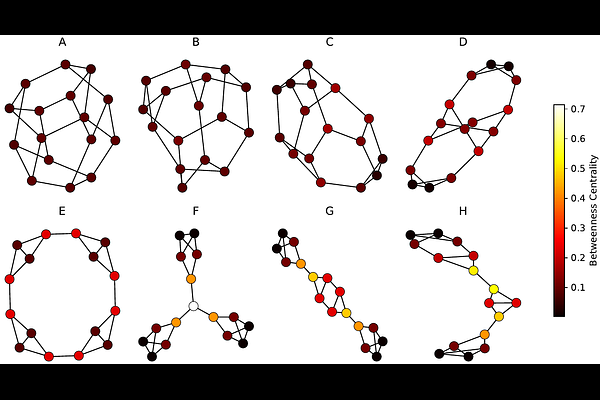
AbstractWe extend previous models of cumulative cultural evolution by incorporating structured populations and social networks. We examine how connectivity and network topology shape the accumulation of cultural complexity under unbiased (copy randomly), indirectly biased (copy successful individuals), and directly biased (copy successful traits) transmission. We consider random, scale-free, and small-world networks, as well as the communication structures introduced by Mason and Watts, and derive analytical approximations for the homogeneous case. We find that the effects of social structure depend strongly on the form of transmission bias. Under unbiased transmission, network effects are weak except at very low connectivity. Under indirect bias, cultural complexity increases with connectivity, whereas direct bias shows optimal performance at intermediate connectivity, reflecting a trade-off between diffusion and diversity. Differences across topologies are generally modest once the average degree is fixed. Overall, our results show that no single social structure universally promotes cumulative cultural evolution; instead, its effects depend primarily on the dynamics of learning and innovation.