A transcriptional continuum links viral burden and host-cell biology in human lymphoid tissue

A transcriptional continuum links viral burden and host-cell biology in human lymphoid tissue
Mangold, J. F.; Schrode, N.; Fortune, T.; Keane, A. M.; Shroff, S.; Petri, S.; Tweel, B.; Beaumont, K. G.; Swartz, T. H.
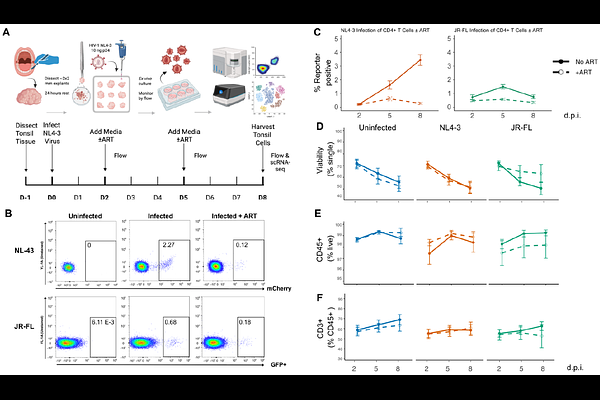
AbstractHuman immunodeficiency virus (HIV-1) persistence in lymphoid tissue remains a major barrier to cure, yet infected cells are commonly represented using discrete categories that may obscure biologically meaningful heterogeneity. Using an ex vivo human tonsil explant model and single-cell RNA sequencing of more than 42,000 T cells, we show that HIV transcription spans a structured continuum and that viral transcriptional burden functions as an organizing axis of host-cell biology. Across the continuum, increasing HIV transcription is associated with coordinated remodeling of immune, inflammatory, metabolic, and redox-associated programs. Lower transcriptional tiers were enriched for innate sensing and inflammasome-associated responses, whereas higher tiers exhibited activation of oxidative phosphorylation and redox-buffering pathways. Antiretroviral therapy preferentially depleted highly transcriptionally active populations while preserving lower and intermediate tiers, resulting in compression rather than elimination of the continuum. Together, these findings provide a quantitative framework for interpreting HIV transcriptional heterogeneity within human lymphoid tissue and suggest that persistent viral activity reflects a spectrum of host-virus states rather than a single infected-cell population. By linking viral transcriptional burden to distinct host-cell programs, this framework may inform future strategies to reduce HIV persistence and its associated inflammatory consequences.