Engineering hyaluronic acid-binding cytokines for enhanced tumor retention and safety

Engineering hyaluronic acid-binding cytokines for enhanced tumor retention and safety
Fink, E.; Pinney, W.; Duhamel, L.; Al-Msari, R.; Krum, D.; Stinson, J. A.; Wittrup, K.
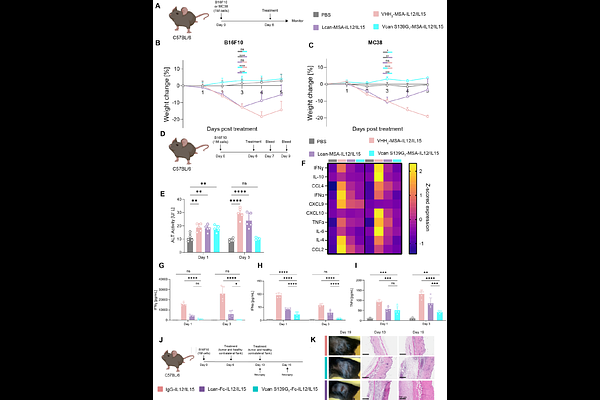
AbstractIntratumoral delivery of immunotherapy offers a means to enhance efficacy while limiting systemic toxicity, yet rapid diffusion from the tumor constrains dosing levels. Extracellular matrix-targeted anchoring strategies have emerged to improve tumor retention, but the influence of matrix target choice remains poorly understood. Here, we engineered a hyaluronic acid-anchoring platform and directly compared it to a well-established collagen-binding strategy for the delivery of IL-12/IL-15 combination therapy, assessing pharmacokinetic, efficacy, and toxicity endpoints. Hyaluronic acid anchoring markedly enhanced intratumoral retention and tumor loading relative to both unanchored and collagen-anchored constructs. While all anchored cytokine therapies achieved comparable curative tumor control, hyaluronic acid anchoring was associated with improved tolerability, including attenuated systemic inflammation, reduced liver toxicity, and diminished local tissue damage. Analysis of intratumoral immune signaling further indicated that the anchoring strategy modulates local cytokine exposure and immune cell infiltration, despite similar therapeutic outcomes. These findings demonstrate that extracellular matrix target selection significantly shapes the pharmacologic and safety profiles of intratumoral biologics, and identify hyaluronic acid anchoring as an alternative retention strategy with potential advantages.