Altered metabolic health during pregnancy in mice with lean polycystic ovary syndrome-like traits from high prenatal AMH

Altered metabolic health during pregnancy in mice with lean polycystic ovary syndrome-like traits from high prenatal AMH
Houston, E. J.; Jewett, E.; Athar, F.; Templeman, N. M.
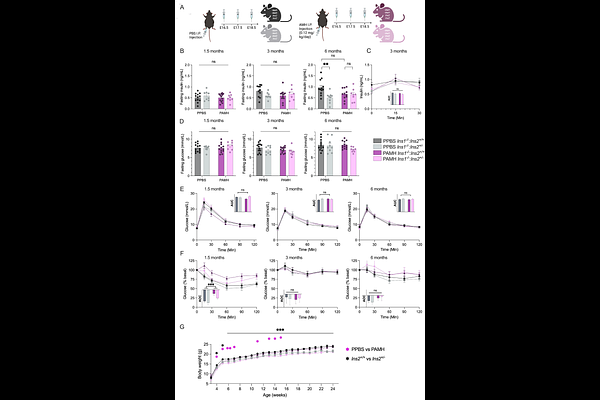
AbstractPolycystic ovary syndrome (PCOS) is a heterogenous reproductive disorder that is often associated with metabolic dysfunction, as well as comorbidities such as pregnancy complications. Although metabolic traits like hyperinsulinemia (i.e., elevated insulin without hypoglycemia) likely exacerbate the reproductive and metabolic features of PCOS, the precise impacts of specific metabolic traits on PCOS pathogenesis, symptom severity, and comorbidity incidence are not known. The aim of our study was to investigate the relationships between insulin levels, PCOS-like traits, and pregnancy complications by limiting endogenous insulin production in a mouse model of PCOS. Using Ins1-null mice with modulated Ins2 gene dosage (Ins1-/-:Ins2+/- versus Ins1-/-:Ins2+/+ littermates), we longitudinally assessed metabolic and reproductive phenotypes in PCOS-like mice generated via prenatal anti-Mullerian hormone (PAMH) exposure. We observed mild reproductive characteristics of PCOS in PAMH mice of both genotypes, including increased anogenital distances, delayed puberty, and disrupted estrous cycling, but did not detect robust PAMH-induced metabolic changes across six months. In the absence of PAMH-aggravated metabolic dysfunction or hyperinsulinemia -- even in mice fed a high-fat, high-sucrose diet -- reducing Ins2 gene dosage did not notably change most measured traits. However, high-fat, high-sucrose-fed PAMH pregnant dams exhibited a diminished pregnancy-induced insulinogenic response and a trend for reduced beta-cell mass compared to control mice, together with superior blood glucose homeostasis despite the physiological challenges of pregnancy. Therefore, while Ins1-null PAMH mice did not manifest pronounced PCOS-like metabolic features, prenatal AMH exposure can cause shifts in metabolic homeostasis during pregnancy.