Limitations of inferring antiviral efficacy of interfering particles from observational natural histories

Limitations of inferring antiviral efficacy of interfering particles from observational natural histories
Khetan, N.; Vasen, G.; Smith, D. M.; Weinberger, L.
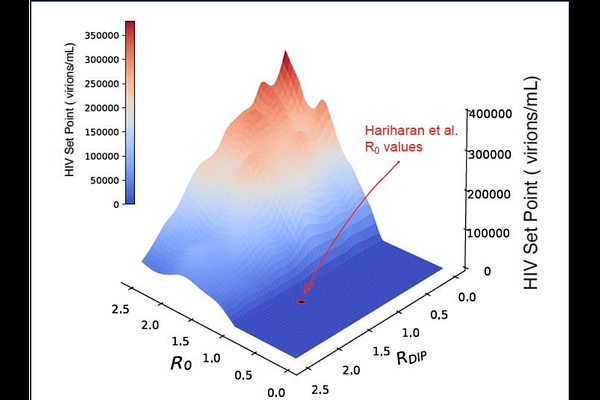
AbstractRecently Hariharan et al. (Nature Microbiology, 2025) reported naturally arising defective HIV genomes capable of conditional replication and interference in humans. While this work makes an important contribution to the field of therapeutic interfering particles (TIPs), particularly with respect to safety and tolerability, it also raises fundamental issues regarding: (i) whether the presented data constitute a valid test of, or support conclusions about, the therapeutic potential of TIPs and (ii) technical issues pertaining to the reported basic reproductive numbers (R0). Hariharan et al. conclude that the findings raise concerns about the effectiveness of TIPs. However, the data presented do not constitute a valid test of therapeutic efficacy. Here, we (i) clarify that post-hoc observational natural history cannot adjudicate the success or failure of an intervention, (ii) show new analysis highlighting how the reported R0 measurements are internally inconsistent with the within-host viral dynamics reported, and (iii) explain that alternative, well-established mechanisms remain sufficient to explain the reported observations.