Experimental Evidence for HIV-Associated Phenotypic Reprogramming of CD4⁺ T Cells: An Exploratory Immunological Study

Experimental Evidence for HIV-Associated Phenotypic Reprogramming of CD4⁺ T Cells: An Exploratory Immunological Study
Hesen, S. S.; Kassem, K. F.; Salah, M. S.; Abu-Seida, A. M.
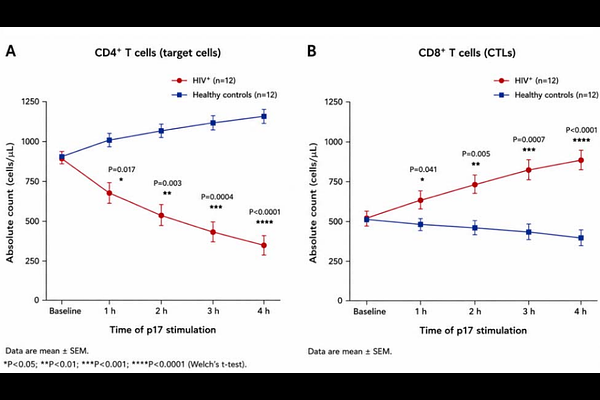
AbstractBackground: Human immunodeficiency virus type 1 (HIV-1) infection is characterized by progressive immune dysfunction, classically attributed to depletion of CD4 T lymphocytes. Despite decades of research, the mechanisms underlying the functional deterioration of cellular immunity remain incompletely understood. We hypothesized that, in addition to quantitative CD4 T-cell loss, HIV infection may induce phenotypic reprogramming of CD4 T cells, resulting in altered surface-marker expression and impaired immunological function. Methods: Peripheral blood samples were obtained from untreated HIV-positive individuals and healthy controls. Flow cytometric immunophenotyping, recombinant HIV-1 p17 stimulation assays, immunofluorescence imaging, ELISPOT analysis of interferon-{gamma} secretion, and CD4/CD8 conjugation assays were performed to investigate dynamic changes in T-cell phenotype and function following viral protein exposure. Results: HIV-positive samples demonstrated progressive reductions in CD4 T-cell counts accompanied by corresponding increases in CD8 T-cell populations following p17 stimulation, while the combined CD4/CD8 T-cell count remained relatively stable. Immunofluorescence analyses identified cells exhibiting simultaneous CD4- and CD8-associated marker expression after prolonged incubation. Functional analyses further demonstrated markedly reduced interferon-{gamma} secretion in the newly identified cell population compared with conventional CD8 T cells. Conjugation assays additionally suggested altered cellular interaction patterns between reprogrammed cells and target CD4 lymphocytes. Conclusions: These findings support the hypothesis that chronic HIV infection may be associated with phenotypic reprogramming of CD4 T cells rather than simple quantitative depletion alone. Although the underlying molecular mechanisms remain to be established, this exploratory model provides an alternative framework for investigating HIV-associated immune dysfunction and may stimulate future studies using lineage-tracing, single-cell transcriptomics, and epigenetic profiling to evaluate this proposed mechanism.