Bacterial histone-like proteins released during antibiotic treatment mediate vascular injury in meningococcal sepsis.

Bacterial histone-like proteins released during antibiotic treatment mediate vascular injury in meningococcal sepsis.
McGuinness, D.; Johnson, C.; Lemgruber Soares, L.; Bidmos, F.; Yates, E. A.; Turnbull, J. E.; Evans, T.; McHugh, R. E.; Roe, A. J.; Douce, G.; Smith, A.; Ure, R.; Toh, C.-H.; Abrams, S.; Herberg, J.; Wright, V. J.; Nijman, R.; HEYDERMAN, R. S.; Faust, S. N.; Levin, M.; Moxon, C.
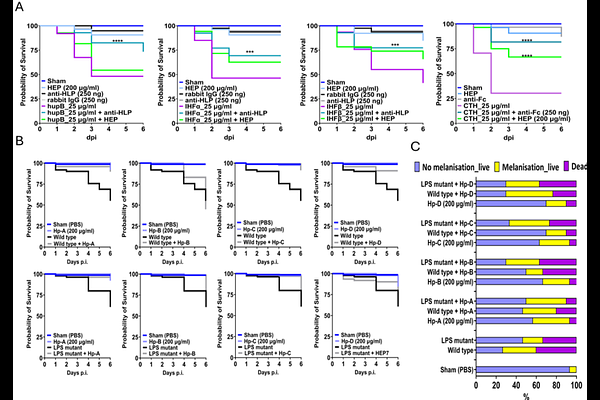
AbstractVascular injury and coagulopathy are key drivers of mortality in bacterial sepsis. In Neisseria meningitidis infection, endothelial adhesion and thrombosis cause the characteristic petechial rash and, in the most severe cases, purpura fulminans. Although antibiotics rapidly kill bacteria, inflammation and vascular injury often persist or worsen after bacterial clearance, suggesting ongoing toxicity from released bacterial components. Here we identify bacterial histone-like proteins (HLPs), small positively charged DNA-binding proteins conserved across bacterial species, as previously unrecognized mediators of vascular damage. In vitro HLPs are released following antibiotic exposure, disrupting endothelial integrity. In patients with severe sepsis, they are detectable in plasma and tissue, colocalising with areas of vascular leak and coagulopathy. Non-anticoagulant heparins and anti-HLP antibodies neutralize HLP-induced endothelial disruption and toxicity in vitro and in vivo. These findings reveal HLPs as antibiotic-released bacterial toxins and suggest new therapeutic strategies to prevent vascular injury in sepsis.