A plant-based biostimulant modulates grapevine susceptibility within a realistic water stress window through priming and phenylpropanoid pathway regulation

A plant-based biostimulant modulates grapevine susceptibility within a realistic water stress window through priming and phenylpropanoid pathway regulation
Poucet, T.; Chen, G.; Bourg, J.; Busuttil, A.-M.; Delmas, C.; Dufour, M. C.
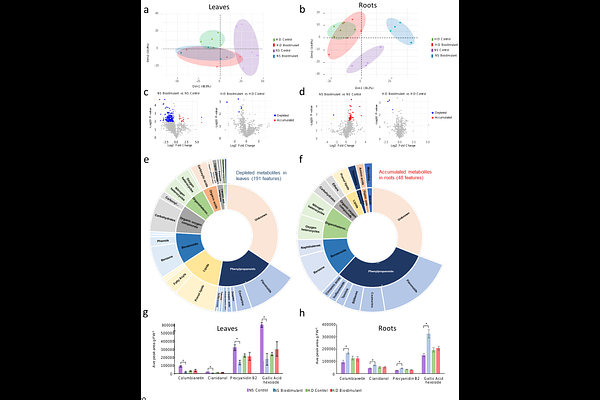
AbstractFluctuating extreme weather events, coupled with rising average temperatures, can severely impact grapevine physiology and yield. While biostimulants have been gaining acceptance as a short-terms tools to enhance grapevine resilience, their adoption is hindered by inconsistent efficacy, partly driven by unpredictable plant stress levels. Over two contrasting seasons, we integrated physiological, transcriptomic, and metabolomic analyses to investigate how a plant-based biostimulant modulates the sensibility of Vitis vinifera under varying intensities of heat, drought, and their combination. This panel of water status, ranging from -0.02 to -1.6 MPa, revealed that the physiological response induced by the biostimulant treatment alleviates water stress within a field-relevant hydraulic window located between -0.4 and -1.2 MPa. Moreover, moderate but constitutive reduction of growth parameters in biostimulant plants, suggests a trade-off between vegetative development and abiotic stress responses. Accordingly, gene expression analysis revealed an interaction between water availability and the plant response to the biostimulant, which suggest an activation of priming mechanisms. Metabolic profiling supported these findings, highlighting the central role of phenylpropanoid pathway modulation, together with adjustments in ROS dynamics and stress-related hormone responses, particularly abscisic acid. Overall, this work emphasizes the need for integrating detailed plant water status and leaf gas exchange to accurately evaluate biostimulant performances under abiotic stress.