Characterization of mycobiota in faba beans infected with Alternaria spp.

Characterization of mycobiota in faba beans infected with Alternaria spp.
Bankina, B.; Fomins, N.; Gudra, D.; Kaneps, J.; Bimsteine, G.; Roga, A.; Stoddard, F.; Fridmanis, D.
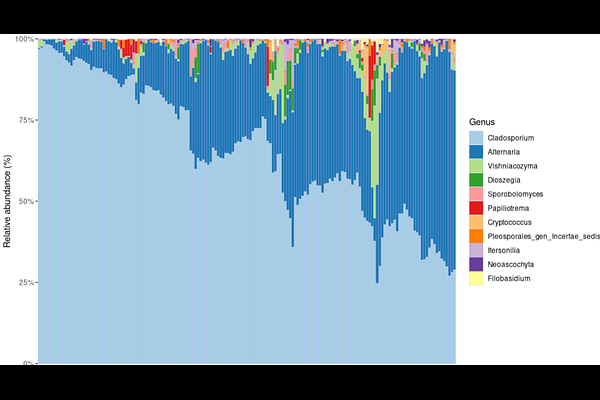
AbstractAbstract. Leaf diseases pose a serious threat to faba bean production. Leaf blotch of faba bean, caused by Alternaria spp., has become increasingly widespread and destructive in several countries. Leaf diseases pose a serious threat to faba bean production. The infection of plant by pathogens can be influenced by various factors associated with the host plant, environmental conditions and presence of other microorganisms. The phyllosphere and endosphere play a critical role in plant health and disease development. This study aimed to evaluate the factors shaping the structure and diversity of fungal communities associated with faba beans. Plant samples were collected in 2004 from two intensively managed faba bean production fields in the central region of Latvia. Fungal assemblages were characterized using an ITS region metabarcoding approach based on Illumina MiSeq sequencing. Among the assigned amplicon sequence variant (AVS), 65% belonged to the phylum Ascomycota, while approximately 4% were classified as Basidiomycota. Alternaria and Cladosporium were the dominant genera across samples. The alfa and beta diversities of fungal communities was higher during flowering of faba beans to compare with ripening. The higher abundance of Basidiomycota yeasts were observed during flowering, in contrast, Cladosporium genus was significantly more abundant during ripening. Alternaria DNA was found on leaves that showed no symptoms of the disease. The diversity and composition of fungal communities were significantly influenced by sampling time and presence of leaf blotch, caused by Alternaria spp.