Differential Metabolite Production Underlies Disruption of the Cystic Fibrosis Airway Microbiota by Pathogens

Differential Metabolite Production Underlies Disruption of the Cystic Fibrosis Airway Microbiota by Pathogens
Morabbi, S. M.; Bhowmik, N.; Sutherland, S.; Wylie, E. A.; Decker, R. S.; Al Daerwish, A.; Perez Perez, M.; Pascual, E.; Lutter, E. I.; Philmus, B.; Stubbendieck, R. M.
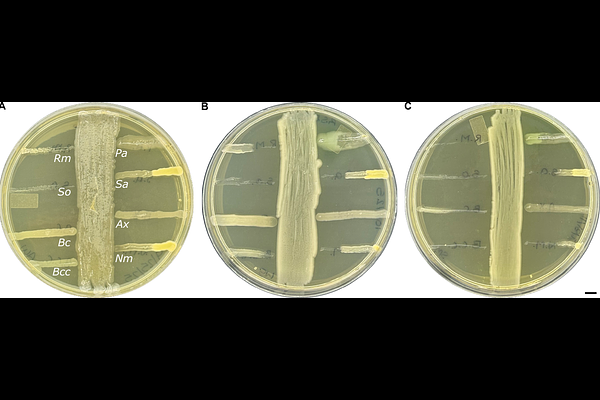
AbstractCystic fibrosis (CF) is a multisystem disease characterized by the accumulation of mucus in the airways that promotes pathogen colonization, leading to respiratory exacerbations, lung failure, and death. Culture-independent approaches have revealed that the CF airway harbors a complex microbiota, including opportunistic pathogens and bacteria that colonize the oropharynx. Here, we reanalyzed 5,260 16S rRNA gene microbiota datasets to infer ecological associations between members of the CF microbiota. We determined that pathogens are more likely to proliferate and dominate when present, while oropharyngeal bacteria are more likely to form persistent communities. Further, we found higher diversity and increasing numbers of inferred interactions were positively associated with lung function. In contrast, pathogens were negatively associated both with each other and with oropharyngeal bacteria, suggesting that they may disrupt the microbiota. To validate these predictions, we cultured 1,597 bacterial isolates from 96 people with CF and performed 12,542 coculture assays against eight representative CF pathogenic and oropharyngeal bacteria. 23% of these interactions resulted in growth inhibition. While Pseudomonas isolates were, on average, the most inhibitory, we observed variable activity among isolates. We then confirmed that Pseudomonas aeruginosa isolates, even those from the same donor and timepoint, exhibited significant differences in their metabolome and bioactivity profiles that correlated with acquisition of mutations. Together, our results suggest that pathogens may disrupt the CF microbiota and bloom in part through differential metabolite production. Furthermore, these data highlight that characterizing multiple isolates is necessary to capture the full landscape of chemically mediated interactions within microbial communities.