Antimicrobial Resistance Profiling and Phenotypic Characterization of Archived Clinical Bacillus paranthracis Strains

Antimicrobial Resistance Profiling and Phenotypic Characterization of Archived Clinical Bacillus paranthracis Strains
Michel, P. A.; Maxson, T.; Chivukula, V.; Overholt, W.; Medina Cordoba, L. K.; Ayodele-Abiola, S.; McQuiston, J.; Beesley, C. A.; Bell, M.; Figueroa, V. C.; Bugrysheva, J.; Chandross-Cohen, T.; Weiner, Z.; Carroll, L. M.; Kovac, J.; Sue, D.
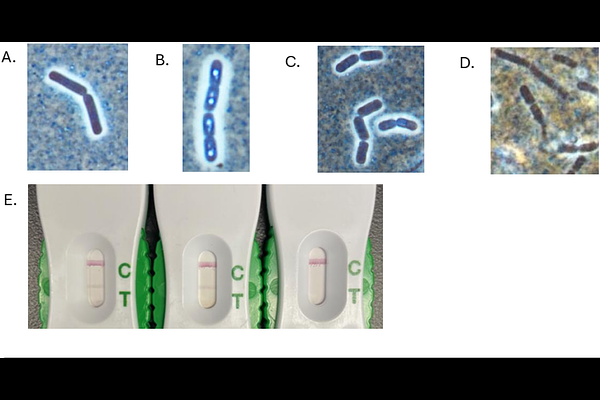
AbstractBacillus paranthracis was formally defined as a species in 2017, after decades of carrying the name "emetic B. cereus" based on cereulide production and clustering within B. cereus sensu lato phylogenetic group III. Commonly associated with foodborne intoxication, reports rarely link B. paranthracis to non-foodborne clinical illness. As such, the new taxonomy and close resemblance of the name to the biothreat pathogen Bacillus anthracis cause confusion in diagnostic and public health settings. To address this issue, B. paranthracis clinical strains (n=20) from the CDC collection were tested with microbiological methods used for identification of B. anthracis and antimicrobial susceptibility testing. Some B. paranthracis phenotypes were similar to B. anthracis, however others were inconsistent across strains. Like B. anthracis: 3 strains tested capsule positive, 5 were non-hemolytic on blood agar, and 9 non-motile. All B. paranthracis strains were resistant to gamma phage lysis, which differentiated them from B. anthracis. Treatment regimens for B. paranthracis infections are not well established, as antimicrobial therapy is not indicated for emetic intoxication caused by B. paranthracis. Notably, six B. paranthracis strains had elevated minimal inhibitory concentrations to anthrax-recommended antibiotics: one for ciprofloxacin, three for doxycycline and tetracycline, and two for clindamycin. Rapid MinION sequencing was assessed for antimicrobial resistance detection prediction but had limited value when using PiMA v.1. These microbiological observations and susceptibility profiles of B. paranthracis expand our understanding of this pathogen, strengthening our ability to differentiate this bacterium from B. anthracis to improve diagnosis and patient outcomes.