Comparative genomics reveals modular virulence repertoires and extensive horizontal gene transfer in Vibrio species associated with white syndrome of Porites cylindrica

Comparative genomics reveals modular virulence repertoires and extensive horizontal gene transfer in Vibrio species associated with white syndrome of Porites cylindrica
Rubin, E.; Shimpi, G.; Rouze, H.; Bentlage, B.
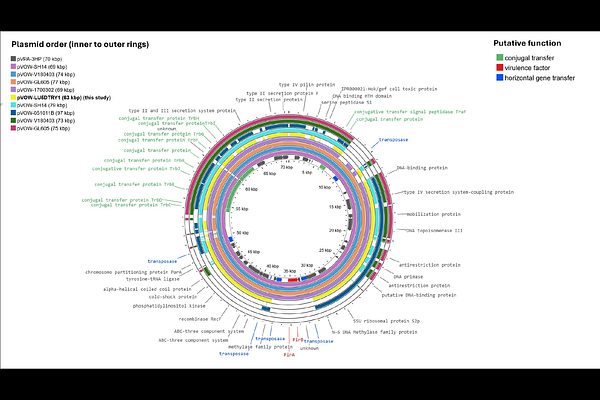
AbstractCoral white syndrome (WS) is a widespread condition characterized by tissue loss and skeletal exposure, with multiple bacterial pathogens, particularly Vibrio species, implicated in its etiology. To investigate the genomic basis of potential virulence in Vibrio associated with WS of Porites cylindrica, we isolated 57 Vibrio strains from healthy and diseased coral tissues collected from reefs in Guam. Thirteen representative strains from five dominant species, V. coralliilyticus, V. owensii, V. tubiashii, V. harveyi, and V. tetraodonis, were selected for whole-genome sequencing using Oxford Nanopore Technology. Comparative genomic analyses revealed a conserved repertoire of extracellular enzymes, including hemolysins, cytolysins, metalloproteases, and subtilisin-like peptidases, alongside lineage-specific toxin and regulatory modules. Variation in secretion systems (T1SS - T6SS), particularly in T3SS, T4SS, and T6SS subtypes, reflected diversification of host-interaction and competitive capacities across species. Mobile genetic elements, including plasmids and prophages, contributed additional virulence-associated genes and secretion clusters, underscoring the role of horizontal gene transfer in shaping the accessory genome content. Notably, V. coralliilyticus harbored cholera toxin related genes (ace and zot), while conjugative plasmid systems indicated potential for gene dissemination across lineages. Together, these findings demonstrate that virulence potential in coral-associated Vibrio is broadly distributed and structured by a conserved ecological core overlaid with flexible, horizontally acquired modules. This study provides the first comparative genomic framework for Vibrio associated with P. cylindrica, advancing our understanding of how genomic plasticity and modular virulence repertoires may contribute to opportunistic disease dynamics in coral reef ecosystems.