Multi-omics profiling reveals convergent adaptation of urinary Pseudomonas aeruginosa isolates

Multi-omics profiling reveals convergent adaptation of urinary Pseudomonas aeruginosa isolates
Martin-Duval, C.; Dahyot, S.; Tebani, A.; Harel, B.; Bonnemains, E.; Debayle, E.; Bekri, S.; GIARD, J.-C.; Pestel-Caron, M.
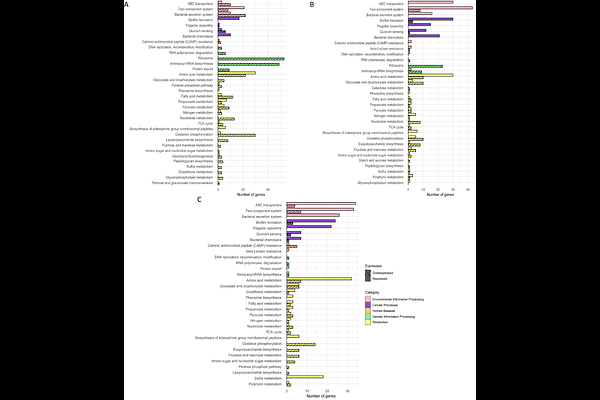
AbstractPseudomonas aeruginosa is a major opportunistic pathogen, responsible for healthcare-associated urinary tract infections. Its metabolic flexibility and genomic plasticity promote its survival and adaptation in complex environments. Here, we conducted an in-depth analysis of three pairs of sequential P. aeruginosa urinary isolates, named "early" and "late", from three patients to investigate metabolic and phenotypic changes during urinary tract adaptation. An integrated multi-omics approach combining RNA sequencing and metabolomics was performed on isolates grown in human urine (HU) and trypticase soy (TS) medium, and compared with previously published proteomics data. Late isolates showed down-regulation of genes encoding type VI secretion system in both media, while oxidative phosphorylation associated-genes were up-regulated in HU. These late isolates also displayed significant down-regulation of amino-acid metabolism suggesting an increased use of carbon sources available in urine. As previously observed in proteomics, siderophore- and iron-related genes were significantly down-regulated for all late isolates in HU but not in TS, supporting convergent adaptation to the low-iron urinary environment. Metabolomic profiles of HU supernatants from late isolates clustered together, showing common metabolite production in HU. The differential metabolic profile between early and late isolates included phosphatidylcholines, acylcarnitines, biogenic amines and amino-acids, highlighting their importance in urinary adaptation. While long-term survival in HU and TS was similar between isolates, biofilm formation was reduced or lost in late isolates in line with the down-regulation of biofilm-related genes. These findings highlight the transcriptomic and metabolic reprogramming as well as the phenotypic changes occurring during P. aeruginosa adaptation to the urinary tract.