Hypoadiponectinemia does not enhance anxiety-like behaviour in a lean PCOS-like mouse model

Hypoadiponectinemia does not enhance anxiety-like behaviour in a lean PCOS-like mouse model
Samad, M. b.; Ek, J.; Kataoka, J.; Lindgren, E.; Ohlsson, C.; Asterholm, I. W.; Stener-Victorin, E.; Benrick, A.
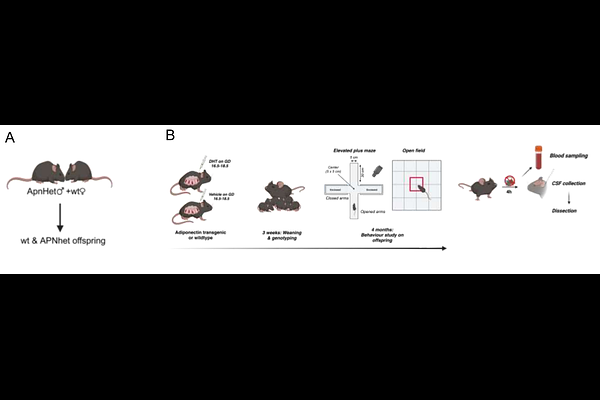
AbstractPolycystic ovary syndrome (PCOS) is characterized by reproductive and metabolic disturbances and is associated with increased symptoms of anxiety and depression. Circulating adiponectin, an insulin sensitizing adipokine, is reduced in women with PCOS, and low adiponectin has been linked to impaired mental health, particularly in females. We investigated whether low serum adiponectin is associated with impaired mental health in women with PCOS and whether adiponectin deficiency exacerbates anxiety-like behaviour in a PCOS-like mouse model. Serum adiponectin was measured in women with (n=179) and without PCOS (n=228), stratified by body mass index (BMI). Health-related quality of life was assessed using the SF-36, generating physical and mental component scores. In parallel, the prenatal androgenization (PNA) PCOS-like mouse model was combined with adiponectin-deficient mice (APNhet) to assess the impact of reduced adiponectin on anxiety-like behaviour with and without prenatal androgen exposure. Women with PCOS had lower total and high molecular weight adiponectin levels compared with controls. Adiponectin positively correlated with mental component scores in women with BMI <30, but not in those with obesity. Free testosterone was inversely correlated with adiponectin. In mice, PNA induced anxiety-like behaviour, however, reduced adiponectin did not exacerbate this phenotype. Although APNhet PNA mice showed 65% lower serum adiponectin levels and reproductive dysfunction, they displayed improved metabolic function. Unlike women with PCOS, adult PNA mice were not hyperandrogenic. These findings suggest that adiponectin is associated with mental health in non-obese women, but reduced adiponectin alone does not induce anxiety-like behaviour in the absence of hyperandrogenism. The differing patterns observed across BMI categories, as well as between the human cohort and experimental data, underscore the complexity of the mechanisms underlying mental health disturbances in PCOS. Keywords: Polycystic ovary syndrome, androgens, adiponectin, health-related quality of life, anxiety