Evolutionary history and microbial cross-feeding shape lifestyle-stratified dominance of Bifidobacterium longum subspecies in infants

Evolutionary history and microbial cross-feeding shape lifestyle-stratified dominance of Bifidobacterium longum subspecies in infants
Guo, W.; Zhang, W.; Yang, L.; Zachariasen, T.; Li, X.; Stokholm, J.; Dai, M.; Thorsen, J.; Sorensen, S. J.; Trivedi, U.
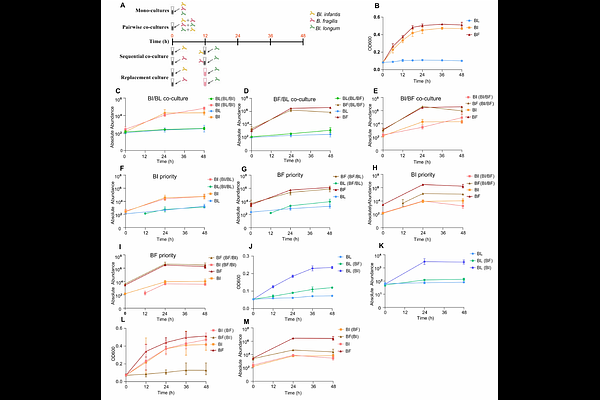
AbstractBifidobacterium longum (Bl.) is a key early-life gut symbiont, yet its evolutionary origin and mechanisms underlying the global biogeographic distribution of its subspecies remain poorly resolved. Here, we compiled a global genomic atlas of >7,000 MAGs/genomes from infants, domesticated animals, non-human primates, and ancient humans. High-resolution phylogenomic and functional analyses expanded infant-associated subspecies to five. Compared with non-human primates, B. longum was more prevalent in domesticated animals and ancient humans dating from 150 to 1,500 years ago. Moreover, human- and livestock-derived lineages from the same geographic regions clustered together, suggesting potential host-associated transmission. Ecologically, Bl. infantis and Bl. longum predominated in non-Western and Western infants, respectively, independent of breastfeeding, delivery mode, or antibiotic exposure. Instead, their distribution was associated with co-occurring microbes and HMO-driven cross-feeding interactions. These findings explain subspecies differentiation in the gut microbiota of Western and non-Western infants and provide a framework for community-mediated interventions in early life.