Selective effects of cyclin dependent kinase inhibitors in gammaherpesvirus reactivation from latency

Selective effects of cyclin dependent kinase inhibitors in gammaherpesvirus reactivation from latency
Gibson, J. E.; van Dyk, L. F.
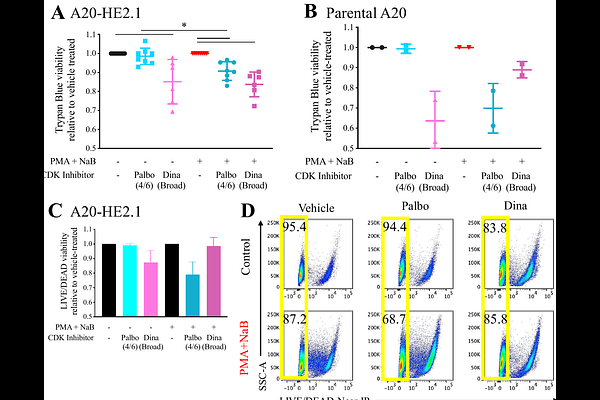
AbstractCell cycle manipulation is critical to oncogenesis, including cancers associated with oncogenic gammaherpesviruses, Epstein-Barr Virus and Kaposi's Sarcoma-associated Herpesvirus. Infection with these viruses can result in various cancers, including lymphomas and carcinomas. In healthy individuals, gammaherpesvirus infections result in lifelong latent infections with occasional reactivation. The cell cycle plays a critical role in infection, particularly in reactivation from quiescent latency to lytic virus replication. A number of cyclin-dependent kinase (CDK) inhibitors are clinically available but with little investigation thus far for virus-associated cancers. Using the mouse gammaherpesvirus model, we assessed the impact of CDK inhibitors on virus reactivation. First, we tested chemical inducers of reactivation, and found that optimal reactivation occurred with a combination of PMA and sodium butyrate. Application of optimal reactivation triggers demonstrated distinct stage-specific outcomes of reactivation, distinguished using flow cytometry to measure expression of GFP (early reactivation) and vRCA, a late viral protein (late reactivation). Following chemical induction of reactivation, we used flow cytometry to demonstrate that the early effects of induction were unaffected by CDK inhibitors. However, all broad spectrum CDK inhibitors tested, Dinaciclib, Alvocidib, and Seliciclib, decreased both reactivation from latency and primary lytic replication. In contrast, the impact of targeted CDK 4/6 inhibitors, Palbociclib, Ribociclib, and Abemaciclib, was more nuanced, with decreased reactivation when given concurrently, but increased reactivation when administered prior to induction. These findings were consistent for both murine gammaherpesvirus and Epstein-Barr Virus. Overall, our data indicate that CDK inhibitors may be useful for targeted treatment of gammaherpesvirus-associated cancers, but optimal use of targeted CDK 4/6 inhibitors requires careful consideration of cell state and order of therapies.