Fluoroquinolone-Triggered Prophage Induction in Streptococcus anginosus Reveals Lytic Cycle, CRISPR-Prophage Interplay, and the potential for Cross-Species Horizontal Gene Transfer

Fluoroquinolone-Triggered Prophage Induction in Streptococcus anginosus Reveals Lytic Cycle, CRISPR-Prophage Interplay, and the potential for Cross-Species Horizontal Gene Transfer
Haider, D.; Barbakadze, S.; Mosler, J.; Mauerer, S.; Read, C.; Sendi, P.; Conrads, G.; Spellerberg, B.
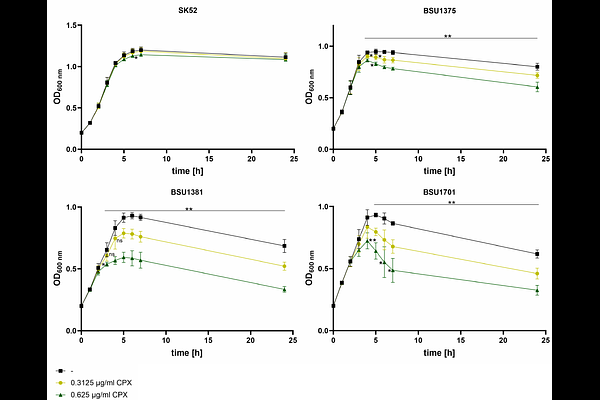
AbstractStreptococcus anginosus (S. anginosus) has long been considered a commensal of the human microbiome but is increasingly associated with invasive infections and malignant processes. For understanding evolutionary dynamics, it is essential to investigate its mobile genetic elements, such as prophages, which are known to impact virulence, antibiotic resistance, and horizontal gene transfer. While many S. anginosus strains carry prophages, lysogen induction by external stimuli has not been demonstrated, and phage-mediated infection or lysis of this species has not been reported. To analyze the prevalence and diversity of prophages in S. anginosus genomes, we screened 140 clinical isolates by PCR revealing that 31.4% of strains were lysogenic. Correlating these findings with the presence of CRISPR immunity, we observed that S. anginosus strains carrying a CRISPR-Cas type II-A system were less likely to harbor prophages. Using a PCR-based approach, the spontaneous excision of several prophages of S. anginosus could be demonstrated and a fluoroquinolone-triggered prophage induction could successfully be established. Induction by ciprofloxacin and levofloxacin resulted in significant, concentration-dependent phage release and bacterial lysis. Transmission electron microscopy revealed viruses exhibiting the morphology characteristic of siphoviruses. Further analysis of the susceptibility of S. anginosus isolates and other oral and pyogenic streptococci to the isolated S. anginosus phages demonstrated a broad host range and the potential for cross-species horizontal gene transfer. In conclusion, a lytic cycle of S. anginosus phages could be induced, highlighting their functional relevance to pathogenicity and horizontal gene transfer, while demonstrating potential clinical implications of antibiotic-mediated prophage activation.