Cardiac PIEZO 1 Channels Modulate Anxiety

Cardiac PIEZO 1 Channels Modulate Anxiety
Summers, J.; Miklja, Z.; Weaver, A.; Taha, J.; Yakimchuk, A.; Kramm, C.; Li, Y.; Afonso, L.; Taha, W.; Farrow, S.; Woodman, R.; Lockette, W.
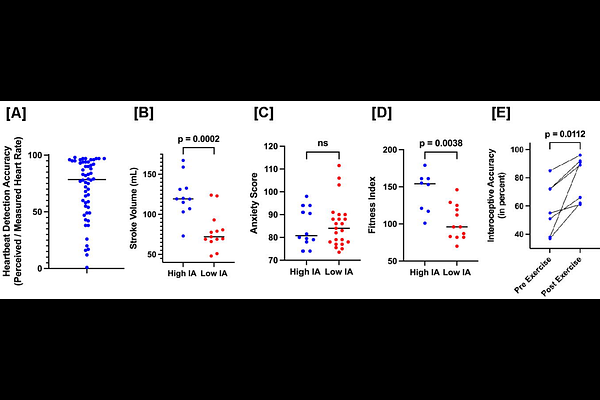
AbstractIncreases in conscious cardiac interoception explain the ability of some individuals with anxiety to feel their heartbeat without taking their pulse. Subconscious cardiac interoception is the detection of heart signals from baroreceptors without subjective awareness. We tested our hypothesis that contrasting sensitivity of PIEZO 1 stretch channels mediates both forms of cardiac interoception and feelings of anxiety. In healthy volunteers, we found conscious cardiac interoception assessed by measuring heartbeat detection accuracy was increased with lower heart rates and greater stroke volumes and cardiac stretch but not associated with anxiety. Disruption of Piezo 1 in cardiac sensory neurons enhanced anxiety in rodents. Accordingly, we used an ex vivo assay of PIEZO 1 sensitivity to correlate subconscious cardiac interoception with anxiety in men and women. When compared to healthy individuals with lower PIEZO 1 sensitivity, men and women with higher PIEZO 1 activity had marked diminution in state anxiety. Those with lower anxiety also had enhanced variability in their instantaneous baroreceptor sensitivity at rest and reduced cardiac rate pressure products following stress. We propose that a reduction in PIEZO 1 sensitivity causes errors in predictive coding; the imbalance between expected and actual heart rate responses to changes in blood pressure leads to anxiety and increased cardiac workloads. We also report testosterone, which is anxiolytic, enhanced, whereas the stress hormone corticosterone, decreased Piezo 1 gene transcription. Selectively enhancing subconscious interoception by increasing PIEZO 1 sensitivity may improve predictive coding, cardiovascular outcomes, and ameliorate the subjective manifestations of anxiety.