Numerosity adaptation reflects multiple levels of sensory processing

Numerosity adaptation reflects multiple levels of sensory processing
Takahashi, T. J.; Roach, N. W.; Hayashi, M. J.
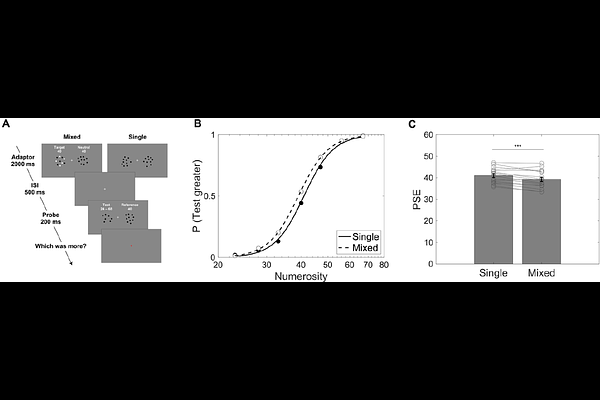
AbstractPsychophysical and neuroimaging studies have repeatedly suggested that perceived numerosity is susceptible to adaptation, involving high-level number representations. However, whether adaptation to low-level visual features contributes to numerosity adaptation remains unclear. Here, we provide evidence that numerosity adaptation involves not only high- but also low-level visual processing stages. Through a series of psychophysical experiments, we found that the effect of numerosity adaptation was significantly reduced, but not eliminated, when the contrast polarity of stimuli was inverted relative to the preceding adaptor. Follow-up experiments confirmed that the persistence of the aftereffects was not due to retinal adaptation or top-down decision bias. Finally, a computational model incorporating both high- and low-level adaptation successfully reproduced the behavioral pattern. These findings suggest that numerosity adaptation involves at least two stages of visual processing: adaptation to low-level visual features at early sensory stages and to numerosity at higher levels of the visual processing hierarchy.