The Critical Role of Pdyn-Lineage Enteric Neurons in Colonic Motility and Visceral Interoception

The Critical Role of Pdyn-Lineage Enteric Neurons in Colonic Motility and Visceral Interoception
Verbaro, D.; Li, J.-N.; Gupta, P.; Jacobo, B.; Mwirigi, J.; Dourson, A.; Gereau, R.
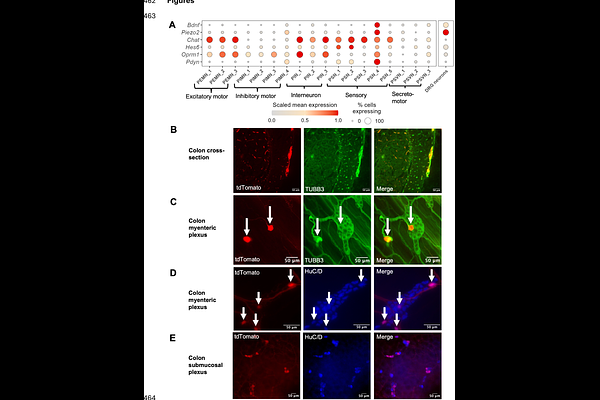
AbstractSensory neurons play well defined roles in the regulation of intestinal motility, digestion, and interoception, but transcriptional dissection of intrinsic and extrinsic sensory neurons innervating the intestines has been challenging because these cells share many genetic markers. However, we cross-referenced transcriptional profiles of intrinsic and extrinsic intestinal neurons and the cells that surround them and identified Pdyn, the gene encoding Prodynorphin, as a marker of putative sensory enteric neurons of the mouse intestines. In a Pdyn lineage-reporter mouse, we identified labeled cells in the myenteric and submucosal plexuses of the large intestine, in contrast to their sparse presence in the dorsal root or nodose ganglia. In dissociated cell culture, these neurons mostly display a phasic firing pattern, discharging one or two action potentials at the onset of a depolarizing current pulse, followed by a prompt cessation of firing despite continued current injection, as assessed by whole-cell patch-clamp recordings. Optogenetic activation of Pdyn-lineage neurons propels stool in ex vivo colons, and in untethered and mobile mice, optogenetic stimulation of the proximal colon induces freezing behaviors and orbital tightening, suggesting interoceptive behaviors, without significant stool output differences. Together, these findings suggest that activation of Pdyn-lineage enteric neurons regulates motility and visceral interoception.