Bile acid dependent attenuation of toxin mediated disease is independent of colonization resistance against C. difficile

Bile acid dependent attenuation of toxin mediated disease is independent of colonization resistance against C. difficile
Kisthardt, S. C.; Perkins, C. E.; Gancz, A. S.; Lyons, N. S.; Thomas, S. A.; Vincent, E. C.; Tam, J.; Melnyk, R.; Rose, E. C.; Baker, E.; Theriot, C. M.
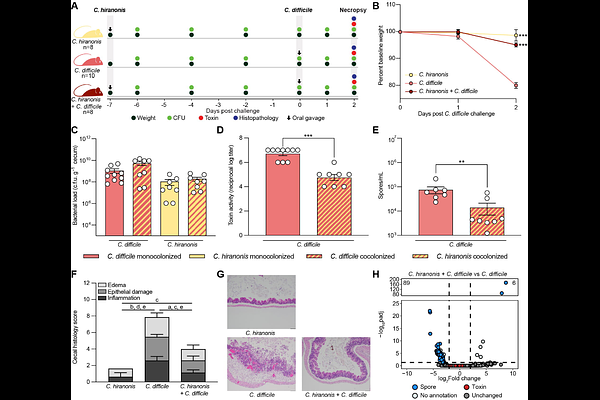
AbstractClostridioides difficile infection (CDI) is a severe antibiotic associated disease and a major cause of morbidity and mortality worldwide. CDI is thought to arise from the loss of protective gut microbes that mediate functions such as secondary bile acid metabolism and nutrient competition, yet the relative contributions of these mechanisms remain unclear. To determine how these processes influence C. difficile growth, virulence, and disease, we performed in vitro and in vivo experiments using two Clostridia strains previously associated with colonization resistance against C. difficile. Neither organism prevented colonization or growth through nutrient competition alone. In contrast, secondary bile acid metabolism significantly reduced toxin-mediated disease in vivo in a strain dependent manner. These findings demonstrate that secondary bile acid modulation is an important component of CDI prevention independent of nutrient competition and suggest that attenuating virulence, in addition to limiting colonization, may represent a key strategy for next-generation CDI therapeutics.