Carbohydrate-active enzymes of giant viruses: Molecular and biochemical characterization of glycosyl hydrolases from algae-infecting chloroviruses

Carbohydrate-active enzymes of giant viruses: Molecular and biochemical characterization of glycosyl hydrolases from algae-infecting chloroviruses
Oliveira, E.; Fajtova, P. A. L.; Sa Magalhaes Serafim, M.; Souza, S.; Filho, C.; Carvalho, J. V.; Gomes, A.; Santos, D.; Motta, M.; Bleicher, L.; Nagem, R.; O Donoghue, A.; Rodrigues, R.
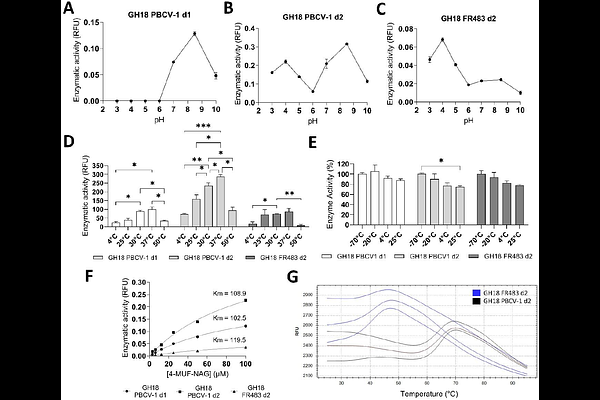
AbstractMicrobial hydrolases are considered to be promising enzymes for pathogen control. Bacterial and viral chitinases of the glycosyl hydrolase (GH) 18 family are important biological macromolecules with antifungal and anti-insect activity. Chloroviruses, nucleocytoplasmic large DNA viruses (NCLDVs) that infect unicellular green algae have a considerable number of genes involved in carbohydrate metabolism, including the chitinase GH18 family. In this study, we investigated the abundance and diversity of chitinases in chlorovirus genomes using a combination of silico and in vitro strategies, and characterized these enzymes at a molecular and biochemical level. Different enzymatic profiles were observed in Chlorovirus subgenera revealing the different viral machinery related to host species. We performed a comprehensive biochemical characterization of three heterologous expressed GH18 domains, which revealed their endo and exochitinase activity and thermostability. Crystallographic analysis of the GH18 domain by X-ray diffraction yielded a structure at 1.0 angstrom resolution, representing the highest-resolution structure reported to date for a giant viral protein and showing lower predominancy of residue coevolution compared GH18 chitinases from other organisms. Additionally, our binding site characterization predicted high conservation in betachloroviruses and gammachloroviruses, and less so in alphachloroviruses. Lastly, these enzymes did not inhibit fungal growth of medical and agricultural importance species in vitro but exhibited high inhibitory activity against different algae at nanogram/mL range. Together, our experimental and computational data show that evolutionary events may contribute to maintaining viral chitinases enzymatic activity and specificity. These findings highlight the potential of virus-derived enzymes as promising new biotechnological tools for microbial control against different algal strains.