SIRT1 remodels astrocyte metabolism and promotes viral replication during neurotropic orthoflavivirus infection

SIRT1 remodels astrocyte metabolism and promotes viral replication during neurotropic orthoflavivirus infection
Angel, J. P.; Alzate, D.; Lindman, M.; Atkins, C.; Daniels, B. P.
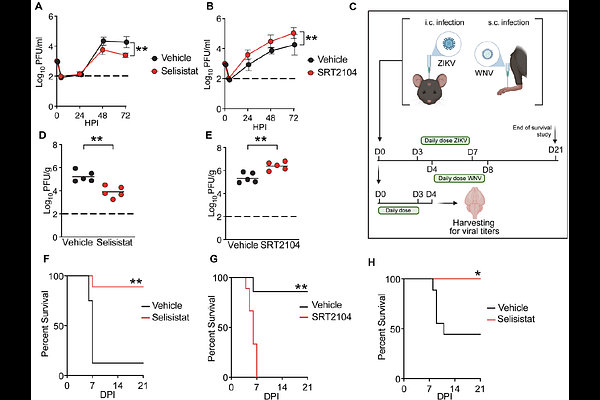
AbstractOrthoflaviviruses depend on host metabolic resources to replicate, but how distinct cell types in the central nervous system (CNS) alter their metabolism in response to infection remains incompletely understood. Here, we examined whether the NAD+-dependent deacetylase SIRT1 is engaged during Zika virus (ZIKV) and West Nile virus (WNV) infection and whether its activity influences infection outcomes. SIRT1 activity increased in astrocytes isolated from infected mouse brains and in infected primary human astrocytes, but not in neurons or CNS myeloid cells. In astrocytes, infection induced transcriptomic, metabolomic, and functional changes consistent with SIRT1 activation, enhanced NAD+ salvage, and enhanced oxidative metabolism. Pharmacologic inhibition of SIRT1 or NAD+ salvage reduced ZIKV replication in astrocytes, whereas SIRT1 activation or supplementation with an NAD+ precursor increased replication. In mice, SIRT1 inhibition or nicotinamide (NAM) treatment reduced viral burden and mortality following ZIKV and WNV infection, while SIRT1 activation worsened disease. Together, these findings identify NAD+/SIRT1 as key regulators of cellular metabolism in infected astrocytes and support a role for this pathway in promoting orthoflavivirus replication and pathogenesis.