Complement modulation synergizes with therapeutic hypothermia in a rat model of neonatal HIE

Complement modulation synergizes with therapeutic hypothermia in a rat model of neonatal HIE
Saadat, A.; Pallera, H.; Lattanzio, F.; Jacubovich, D.; Newman, S.; Kunam, M.; Necula, A.; Mohammed, A.; Shah, T.
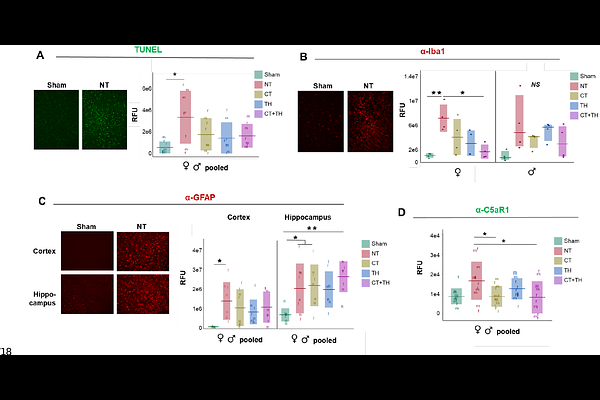
AbstractAbstract. Background. Neurodevelopmental impairment remains common in neonatal hypoxic-ischemic encephalopathy (HIE) despite treatment with the standard of care, therapeutic hypothermia (TH). The complement response activates at reperfusion and is known to exacerbate neuroinflammation and injury, though its full role and interaction with hypothermia are incompletely defined. We hypothesized modulating the complement response can improve structural and functional outcomes in HIE, and tested a novel therapeutic cocktail consisting of C5a-receptor antagonist (PMX205) and intranasal C3a peptides, as both a stand-alone treatment and as an adjuvant to TH (CT+TH). Methods. Wistar rat pups were randomized to treatment groups [Sham (uninjured control), NT (uninjured, normothermia/not treated control), or injured and treated with either TH, CT, or CT+TH]. At term-equivalence, mild-moderate hypoxic-ischemic injury was induced by Vannucci's method. To capture the short and long-term effects of the treatments, cohorts were harvested at 3 or 66-72 days post-injury. Cerebral injury was measured by quantifying levels of inflammatory markers and cerebral tissue loss, and functional outcomes were assessed in a series of behavioral tests. The data were stratified to detect sexual dimorphisms. Results. CT and TH treatments demonstrated test and sex-dependent differences in improvement compared to untreated injury. In male rats, TH treatment worsened long-term hippocampal and thalamic brain injury and functional measures of ataxia and attention. CT-treatment worsened long-term thalamic loss in females. Combining the two treatments (CT+TH) demonstrated additive improvement in both sexes, including short and long-term cortical loss and ataxia. Conclusions. Complement modulation enhances the neuroprotective effects of TH after neonatal hypoxic-ischemic injury, with sex-specific effects on inflammation and behavior. Combining complement modulation with the standard of care often demonstrated synergistic improvement in both sexes, supporting complement-targeted therapy as a promising adjunct to hypothermia in neonatal HIE.