LRP6-Guided Engineering of AAV9 Variants with Enhanced Blood-Brain Barrier Penetration and Reduced Liver Tropism in Non-Human Primates

LRP6-Guided Engineering of AAV9 Variants with Enhanced Blood-Brain Barrier Penetration and Reduced Liver Tropism in Non-Human Primates
Wang, Z.; Xu, X.; Sun, Z.; Li, H.; He, R.; Xu, Y.; Yu, M.; Wang, S.; Hu, C.; Liu, L.; Ren, L.; Zhang, L.; Xiao, T.; Luo, Y.; An, Z.
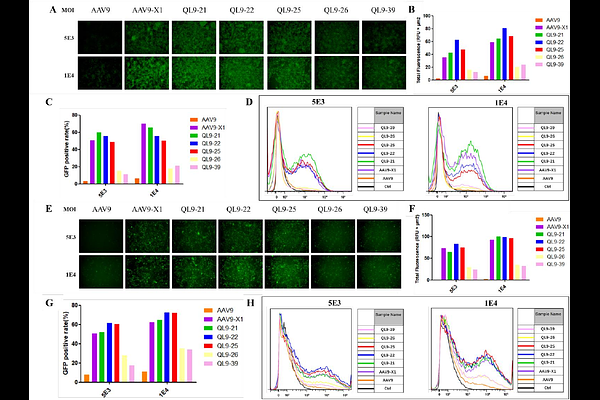
AbstractThe blood-brain barrier (BBB) severely restricts the delivery of systemically administered adeno-associated virus (AAV) vectors for central nervous system (CNS) gene therapy. To overcome this limitation, we engineered a library of AAV9 capsid variants through rational design focused on the low-density lipoprotein receptor-related protein 6 (LRP6), a conserved mediator of transcytosis. A multi-tiered screening strategy, encompassing human BBB endothelial cells followed by neuronal and glial target cells in vitro, identified three lead variants (QL9-21, QL9-22, and QL9-25) with markedly enhanced transduction potential. In mice, these variants achieved a 5-28 fold increase in brain-wide gene delivery compared to AAV9, without elevating hepatic tropism. Crucially, evaluation in non-human primates (NHPs) revealed that the lead variant, QL9-21, mediated a striking 3-40 fold enhancement in viral genome delivery across all examined brain regions versus AAV9, while concurrently reducing liver accumulation by 2.6 fold. Our study establishes an LRP6-guided engineering platform that yields novel AAV9 vectors capable of efficient, species-conserved BBB penetration coupled with a favorable safety profile, representing a significant advance toward clinically translatable CNS gene therapies.