Cross-phosphorylation of RR06 by the non-cognate kinase VncS activates the adhesin CbpA in Streptococcus pneumoniae.

Cross-phosphorylation of RR06 by the non-cognate kinase VncS activates the adhesin CbpA in Streptococcus pneumoniae.
Tan, S.-Y.; Zik, J. J.; Chun, Y.-Y.; Tan, K. S.; Sham, L.-T.
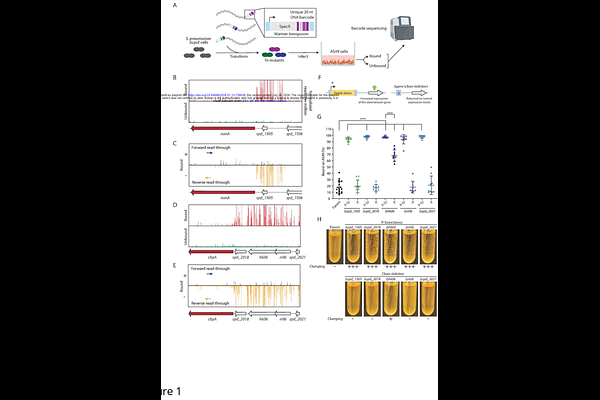
AbstractStreptococcus pneumoniae establishes asymptomatic nasopharyngeal colonization before progressing to invasive disease, a process that requires precise spatiotemporal regulation of surface adhesins. Using a barcoded capsule-switch mutant library and randomly barcoded transposon sequencing (RB-TnSeq), we identified determinants of pneumococcal adhesion to the human alveolar epithelial cell line A549. The capsule masked surface adhesins and reduced binding across all 84 serotypes tested. The transposon screen revealed that overexpression of vncS, the sensor kinase of the two-component system TCS10, markedly increased adhesion, whereas disruption of its cognate response regulator VncR had no detectable effect. Transcriptomic profiling and genetic epistasis established that the adhesin CbpA, known to be regulated by TCS06, is the effector of VncS-driven adhesion. VncS activated cbpA expression through the non-cognate response regulator RR06, independently of VncR. Phos-tag gel analysis demonstrated that VncS cross-phosphorylates RR06 in vivo, and that the cognate kinase HK06 limits this crosstalk by acting primarily as a phosphatase toward RR06. Substitution of the conserved S241 residue of HK06 increased RR06~P levels and upregulated cbpA. By contrast, deleting vncS and hk06 reduced RR06 phosphorylation to nearly undetectable levels. These findings resolve a long-standing mechanistic controversy regarding RR06 activation and uncover a potentially unrecognized role for VncS in regulating pneumococcal host cell adhesion.