Selective repurposing of the eukaryotic DNA replication machinery by a plant virus

Selective repurposing of the eukaryotic DNA replication machinery by a plant virus
Shi, C.; Medina-Puche, L.; Pott, D. M.; Wei, H.; Acatay, S.; Krenz, B.; Hanley-Bowdoin, L.; Lozano-Duran, R.
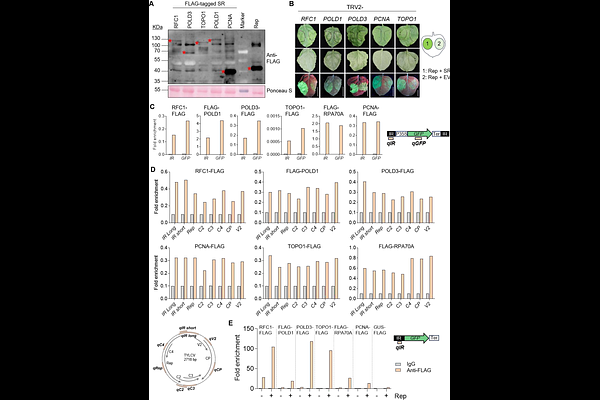
AbstractEukaryotic DNA viruses that replicate in the nucleus often exploit components of the host DNA replication machinery for genome replication. Geminiviruses, causal agents of devastating crop diseases worldwide, strictly depend on host factors to replicate their circular single-stranded (ss) DNA genomes, with only a single virus-encoded protein, Rep, required for this process. Rep recruits host replication proteins to the viral genome and catalyzes nicking and ligation at the initiation and termination sites of rolling-circle replication. Despite the reliance of geminiviral replication on plant proteins, the composition of the viral replisome remains largely unknown. Here, we use TurboID-based proximity labeling to identify plant proteins in the vicinity of the Rep proteins from the geminiviruses tomato yellow leaf curl virus (TYLCV) and abutilon mosaic virus (AbMV) during infection. Combining virus-induced gene silencing, infection assays, and chromatin immunoprecipitation, we identify host DNA replication-related factors required for viral genome replication and likely components of the viral replisome. Our results indicate that geminiviruses and related eukaryotic ssDNA viruses selectively repurpose components of the eukaryotic replication fork to support rolling-circle replication, and suggest that they follow a leading-strand replication mode while utilizing the lagging-strand DNA polymerase {delta}. These findings shed light on the molecular mechanism of geminiviral DNA replication and identify potential targets for engineering antiviral resistance in crops.