Nutrient availability shapes the diversity and structure ofmicrobial communities

Nutrient availability shapes the diversity and structure ofmicrobial communities
Dal Bello, M.; Liu, Y.; Goyal, A.; Gore, J.
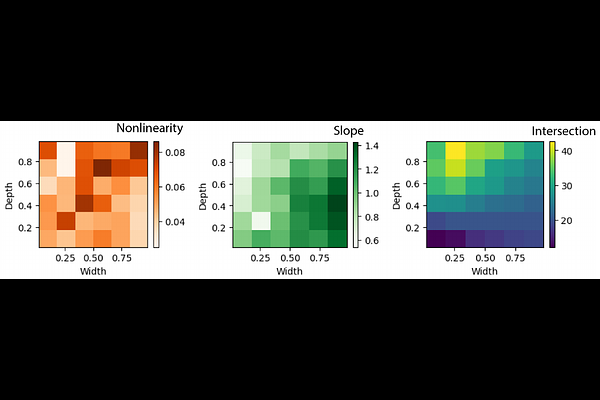
AbstractNutrients are key drivers of microbial community structure, yet we lack a data-driven quantitative framework linking nutrient environments to community assembly. Here, using controlled microcosm experiments, we systematically probe the effects of nutrient number, concentration, and type on community diversity and structure. To explain these effects, we construct a minimal consumer-resource model incorporating resource competition and cross-feeding. We find that cross-feeding network structure is critical: only shallow, wide networks, where several byproducts are produced from a few supplied nutrients in a few trophic layers, reproduce a linear increase in diversity with the number of supplied nutrients. We also perform new experiments varying nutrient concentration and reveal that diversity slowly decreases with increasing concentration. We explain this finding by incorporating consumption-dependent toxicity into the model, consistent with spent-media measurements. This extended model not only recapitulates virtually all observed patterns but makes an independent prediction: at high nutrient concentrations, communities should be enriched in bistable species pairs, which we confirm experimentally. Our work demonstrates that minimal data-driven consumer-resource frameworks, systematically constrained by experiments, can unify and predict a broad range of nutrient-community relationships.