Diet-Induced Obesity Exacerbates Helicobacter pylori-Associated Precancerous Phenotypes

Diet-Induced Obesity Exacerbates Helicobacter pylori-Associated Precancerous Phenotypes
Zhao, X.; Wojcicki, N.; Kim, K.-H.; Lanman, N. A.; Vijayan Pillai, V.; O'Brien, V. P.
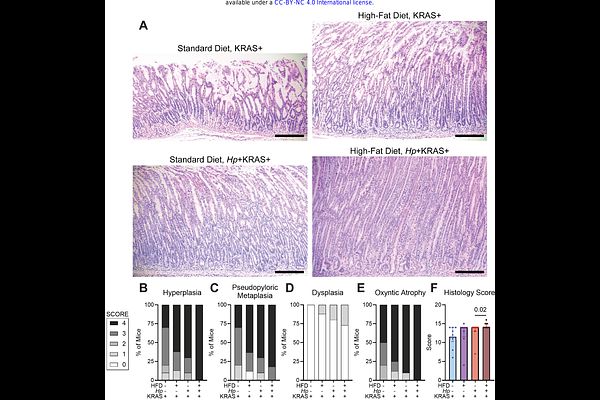
AbstractStomach infection with the bacterium Helicobacter pylori (Hp) can cause chronic gastric inflammation, metaplasia (transdifferentiation of mature cell types), dysplasia (abnormal cells), and finally cancer. Obesity can also increase gastric cancer risk. However, host-Hp interactions during obesity are poorly understood. Here we investigated the impact of diet-induced obesity in two mouse models of Hp-associated disease. To model chronic gastric inflammation, we used C57BL/6 mice, and to model more severe disease, we used transgenic mice in which tamoxifen induces gastric expression of a constitutively active Kras allele, leading to metaplasia. We fed mice a high-fat diet (60% kilocalories from fat) to induce obesity, or a matched control diet (10% kilocalories from fat), then infected them with Hp or mock-infected them. In mock-infected C57BL/6 mice, high-fat diet had a minimal impact on gastric pathology and gene expression. In Hp-infected C57BL/6 mice, high-fat diet increased inflammation at the junction between the glandular stomach and non-glandular forestomach, a squamous epithelium similar to the human esophagus, and increased gastric expression of the cancer-associated genes Cldn7 and Reg3g. In KRAS+ mice with or without Hp infection, the impact of diet-induced obesity was more apparent, with increased metaplasia and dysplasia (abnormal cells). As well, high-fat diet caused an expansion of metaplastic pit cells, a lineage we previously found to be associated with Hp-driven inflammation. Thus, in these mouse models, diet-induced obesity does not directly drive gastric immunopathology, but enhances the development of pre-cancerous changes under susceptible conditions.