Propionate oxidation by Geobacter sulfurreducens is electron acceptor dependent

Propionate oxidation by Geobacter sulfurreducens is electron acceptor dependent
Hernandez Villamor, D.; Bautista Angeli, J. R.; Jeaidi, A.; Joaquin Garcia, A.; Rabaey, K.; Prevoteau, A.
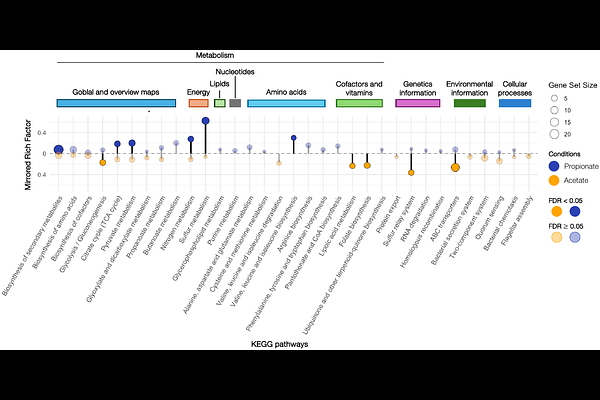
AbstractThe accumulation of propionate is a challenge in numerous fermentative industrial processes because its degradation is energetically unfavorable and limited to few microbial species. Here, we report for the first time the oxidation of propionate by the extracellular electron transfer (EET)-capable bacterium Geobacter sulfurreducens in axenic cultures. G. sulfurreducens was capable of utilizing propionate both as electron donor (ED) and source of carbon with fumarate as electron acceptor (EA). In contrast, propionate was metabolized only in the presence of acetate with soluble Fe(III) citrate, and was not oxidized when insoluble iron oxides or glassy carbon electrodes poised at +0.1 V vs. SHE were the EAs. Biomass yield (per mole of electrons available) was lower with propionate alone than with propionate and acetate together, and acetate was preferentially consumed when both were present. Transcriptomic analysis of cultures grown with either propionate or acetate (with fumarate as EA) showed significant gene expression shifts strongly suggesting the methylmalonyl-CoA pathway as the main route for propionate degradation. Furthermore, propionate-consuming cultures exhibited an upregulation of branched chain amino acids (BCAAs) biosynthesis, as well as sulfur, nitrogen, and 2-oxocarboxylic acids metabolism.