Distinct prokaryotic gut microbiome and proviral-immune axes ofpathophysiology in Sickle Cell Disease

Distinct prokaryotic gut microbiome and proviral-immune axes ofpathophysiology in Sickle Cell Disease
Flamholz, Z. N.; De Los Santos, J.; Ireland, K.; Keenan, J.; Kazmi, J. S.; Mahant, A. M.; Correa, A.; Frenette, P.; Herold, B. C.; Manwani, D.; Kelly, L.
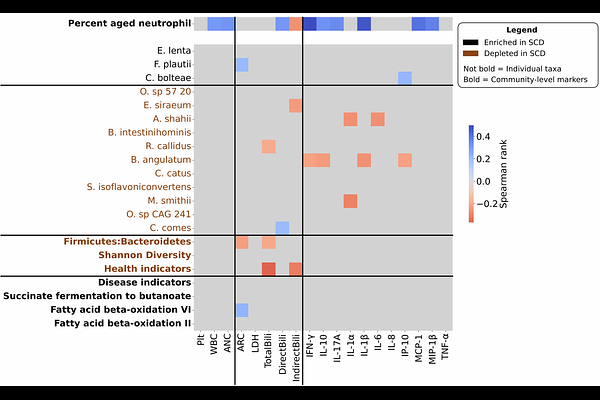
AbstractSickle cell disease (SCD) is a chronic, inherited condition rising across the globe. Prior studies revealed a direct link between the gut microbiome and disease micropathology via aged-like (ANs) neutrophils in mouse models. In SCD patients community-level shifts in the gut microbiome included decreases in diversity and the Firmicutes/Bacteroides (F:B) ratio, coupled to a loss of short chain fatty acid producing microbes and a shift to non-canonical butyrate production and aerobic fatty acid oxidation pathways. ANs and the proviral microbiome associate with multiple blood cytokines, while bacterial gut microbiome features largely do not. Prophages depleted of genes related to lysis, transcriptional regulation, and host takeover were enriched in SCD patient guts, pointing to domestication of these elements, and 25% of prophages were shared at high identity between study patients. In sum, we identify a viral-immune axis in SCD pathophysiology and targetable functional alterations to the gut microbiome in a heterogeneous chronic disease both affected by and effecting microbiome composition and function.