The motive cocktail in childrens altruistic behaviors

The motive cocktail in childrens altruistic behaviors
WU, X. N.; Ren, X.; Dreher, J.-c.; Liu, C.
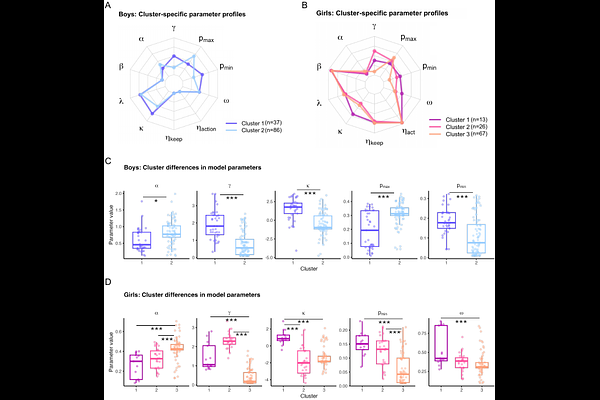
AbstractChildren frequently intervene in social conflicts by punishing violators or helping victims, yet the motivational mechanisms underlying such third-party altruistic behavior remain poorly understood. It remains unclear how children balance fairness concerns against self-interest, how these motivations interact with intervention costs and impact on outcomes, and whether gender and individual differences reflect distinct motivational structures. Here, we applied the motive cocktail model, which assumes that altruistic behavior arises from multiple prosocial motives, to dissociate motivations underlying third-party interventions. We studied 229 children aged 8-12 years (123 boys), an age when fairness and inequality aversion are reliably expressed. The third-party intervention task manipulated inequality between others, the personal cost of intervention, its impact on outcomes, and the form of intervention (punishment versus helping). Children intervened more as inequality increased and less as intervention costs rose, indicating a trade-off between moral benefits and self-interest. Gender differences emerged only under high-cost and high-impact conditions, with boys engaging in more punishment interventions. The motive cocktail model outperformed alternative models and revealed that boys showed stronger aversion to disadvantageous inequality and a greater tendency to reverse victims disadvantage than girls. Clustering analyses further identified distinct motivational profiles within each gender. These findings demonstrate that childrens third-party altruistic behavior is governed by multiple dissociable motives. This study provides a mechanistic account of how social motivations are organized and weighted during late childhood.