Interconnected reservoirs of multidrug-resistant bacteria and plasmids within the hospital built environment

Interconnected reservoirs of multidrug-resistant bacteria and plasmids within the hospital built environment
Annavajhala, M. K.; Hokunson, T. W.; Terzoglou, K.; Uhlemann, A.-C.; Gomez-Simmonds, A.
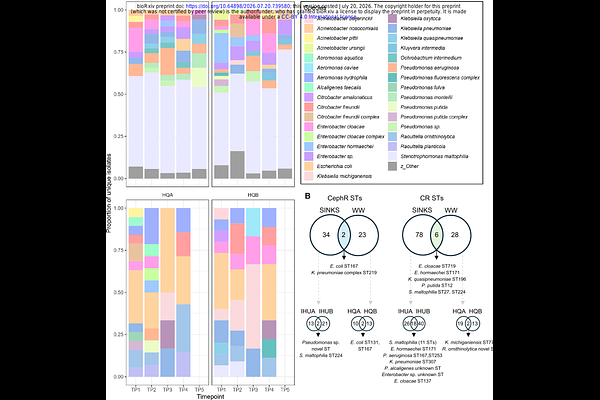
AbstractHospital sinks and wastewater streams are hotspots for contamination and colonization with multidrug-resistant Gram-negative bacteria (MDR-GNB). However, longitudinal studies investigating the population dynamics of environmental MDR-GNB and links between patients and the environment are lacking, especially in non-outbreak settings. Here we aimed to characterize the diversity and abundance of MDR-GNB across the hospital built environment and evaluate their relationship with clinical isolates. We performed nanopore sequencing on MDR-GNB cultured from sink drains (n=523) and wastewater (n=146) at a New York City hospital between March-August 2023. Using comparative genomics and plasmid clustering analyses, we assessed spatial and longitudinal strain and plasmid dynamics and quantified relatedness to historical clinical isolates from the same hospital (n=602). Sink drains (54-73%) and wastewater (100%) demonstrated widespread, longitudinal colonization with MDR-GNB, driven primarily by carbapenem-resistant GNB including opportunistic organisms and Enterobacterales encoding blaKPC. While bacterial colonization was largely niche-specific, we identified both MDR-GNB strains and resistance plasmids that were shared between clinical and environmental sources, as well as differing dynamics between clinical and wastewater versus sink drain samples. This study supports the role of the hospital environment as an important reservoir for clinically-relevant MDR-GNB, but highlights differences across environmental sites which may impact surveillance approaches.