Parallel adaptive responses to postponed reproduction increase lifespan and immune defense

Parallel adaptive responses to postponed reproduction increase lifespan and immune defense
Gamboa-Santarosa, K. A.; Crestani, G. A.; Moran, A.; Modha, D.; Dugo, H. S.; Abdoli, M.; Burke, M.; Shahrestani, P.
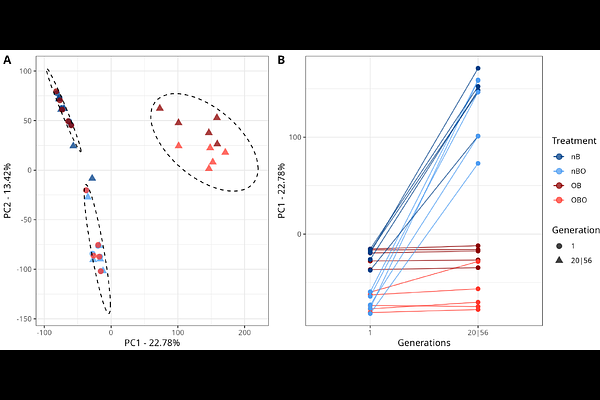
AbstractExperimental evolution studies with Drosophila melanogaster have long played a role in the effort to dissect the genetic basis of aging and longevity. While selection for postponed reproduction reliably extends lifespan, additional phenotypic consequences and the genomic bases of this adaptation remain unclear. Here, we leveraged the highly replicated Drosophila Experimental Evolution Population (DEEP) system to further investigate the relationship between longevity and other life-history traits. Derived from the same wild population, two tenfold-replicated treatments, each with populations derived from two different ancestral backgrounds: a control treatment in a 14-day generation cycle was maintained for 56 generations, and an experimental treatment in a 70-day cycle maintained for 20 generations. Experimental populations evolved to have longer lifespan, delayed development time, increased fecundity, greater stress resistance, and stronger immune defense. Pooled-population genomic data reveal highly convergent allele frequency shifts within treatments, and point to 300 candidate genes underlying differentiated phenotypes. Candidate genes are enriched for functional categories involving neural development and morphogenesis rather than canonical aging or immune defense pathways. These results recapitulate that selection for postponed reproduction drives broad physiological changes and a highly polygenic adaptive response, with an unprecedented level of experimental replication.