Alignment-Free Guided Design of a Pan-Orthoflavivirus RT-qPCR Assay

Alignment-Free Guided Design of a Pan-Orthoflavivirus RT-qPCR Assay
Sayasit, K.; Chaimayo, C.; Nuwong, W.; Boondouylan, T.; Tanliang, N.; Nookaew, I.; Horthongkham, N.
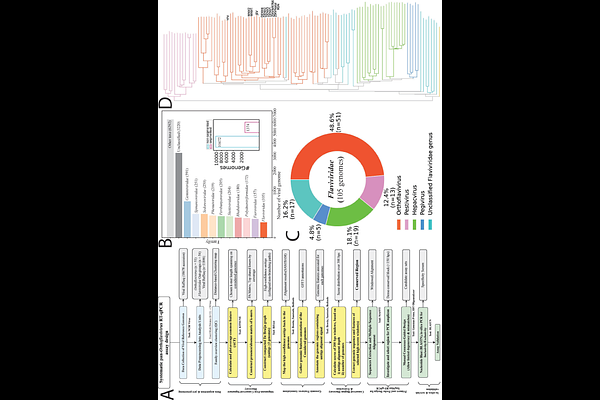
AbstractThe co-circulation and rapid expansion of the genus Orthoflavivirus, including dengue virus (DENV), Zika (ZIKV), and Japanese encephalitis virus (JEV), pose significant global health challenges. Developing inclusive pan-genus molecular diagnostics is hindered by high nucleotide divergence (>25%-30%) and the computational limitations of traditional multiple sequence alignment in detecting conserved motifs across large datasets. To overcome these limitations, we developed a systematic alignment-free design pipeline that uses rigorous k-mer analysis and compacted De Bruijn graphs. We analyzed 11,846 RefSeq viral genomes to identify phylogenetically conserved, functionally relevant signatures within the Orthoflavivirus genus as a case study. The pipeline identified a conserved 600-bp region within the non-structural protein 5 gene, facilitating the design of a broad-spectrum TaqMan RT-qPCR assay. Analytical validation against standard reference strains demonstrated a limit of detection of 1-10 copies/L for DENV1-4, ZIKV, and JEV, with no cross-reactivity against non-target pathogens. In a clinical evaluation of archived samples, the assay achieved 97.33% overall accuracy. It demonstrated 100% sensitivity and specificity for DENV serotypes, yielding significantly earlier cycle threshold (Ct) values compared to a standard commercial kit, while ZIKV detection showed 100% specificity with 71.43% sensitivity. This study validates an alignment-free, k-mer guided approach for uncovering conserved diagnostic targets in highly variable viral genera. The resulting assay offers a robust tool for frontline surveillance, and the computational framework provides a scalable solution for future pandemic preparedness.