Vibrational signatures and mimicry in ant-termite and termite-termite interactions

Vibrational signatures and mimicry in ant-termite and termite-termite interactions
Oberst, S.; Lai, J. C.; Evans, T.
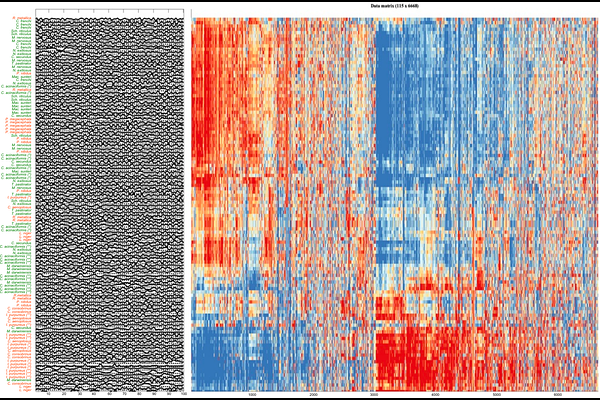
AbstractEusocial insects fascinate researchers with their sophisticated communication systems and sensory specialisations. Ants and termites have coexisted in a long-standing predator-prey arms race, offering insight into the interplay between ecology and evolution. The subterranean termite Coptotermes acinaciformis can detect the predatory ant Iridomyrmex purpureus through footstep-induced vibrations, triggering defensive responses. Ants produce noisier walking signatures than termites, while the inquiline termite Macrognathotermes sunteri walks more quietly than its host, suggesting species-specific vibroacoustic strategies. Using statistical analysis of video-tracked motion and footstep vibrations in confined arenas across six ant and ten termite species, we show that C. acinaciformis, despite its body size, moves more smoothly than ants, which alternate between directed and erratic paths. Inquiline termites, by contrast, displayed erratic movements. Ants consistently produced stronger vibrations closely linked to body mass, while Highly Comparative Time Series Analysis revealed termite motions approaching chaotic dynamics. Notably, while C. acinaciformis and I. purpureus produced distinct vibrational signatures. M. sunteri's signals overlapped with its host, consistent with vibroacoustic mimicry. Although the ecological nature of this association remains unresolved, our findings underscore the central role of vibrational cues in shaping interspecific dynamics and highlight vibroacoustic communication as an underappreciated driver of social insect ecology and evolution.