Bacteriophage treatment of Pseudomonas aeruginosa PA14 infection does not alter the native microbiome of Caenorhabditis elegans

Bacteriophage treatment of Pseudomonas aeruginosa PA14 infection does not alter the native microbiome of Caenorhabditis elegans
Dumaine Carrasco, J. E.; Mantha, A.; Ngo, A.; Choi, A.; Song, E.; Olaniyi, S.; Tran, A.; Herbert, K.; Quijije, A.; Shaw, H.; Gash, A.; Mitra, S.; Ho, A.; Kovacs, C. J.; Kok, C. R.; Be, N. A.; Burpo, F. J.; Kick, A. R.
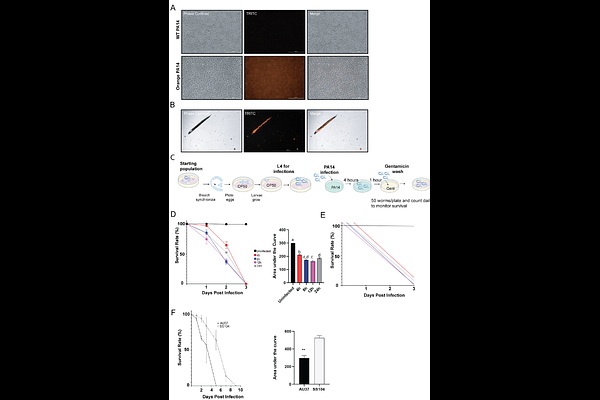
AbstractBacteriophage therapeutics are alternatives to antibiotics for treating multi-drug-resistant (MDR) bacterial infections. Bacteriophages kill host bacteria species with targeted precision, unlike the broad-spectrum nature of antibiotics. While the precision and the natural occurrence of phages in the environment have drawn attention to phages as new "drugs" in the time of accelerated antibiotic resistance, it remains poorly understood how phage treatment impacts the community of organisms composing the microbiome. Before phage therapies can be more widespread in practice, this understanding is required. Caenorhabditis elegans lends itself as an excellent model organism to address this question, as worm populations are raised under sterile conditions and the gut microbiome can be populated experimentally by the worms natural bacterivore diet. Here we have established a C. elegans infection and phage treatment model using fluorescent Pseudomonas aeruginosa PA14 to quantify infection. We isolated and whole genome sequenced PA14-specific lytic phage from wastewater samples near West Point, New York. To characterize the impact of treatment on the microbiome, we populated the C. elegans gut microbiome with 11 strains of the native C. elegans microbiome (CeMbio) and used PacBio sequencing of the full length 16S rRNA gene to characterize the microbiome during PA14 infection in the presence and absence of phage treatment (n = 100 worms per sample, 4 replicates per condition). Taxonomic classification, phylogenetic analysis, and diversity analysis performed using a HiFi 16S bioinformatics pipeline revealed that phage treatment and infection level did not change the overall composition of the C. elegans gut microbiome.