Circulating pre-osteoclasts are primed for osteoclast fate and synovial tissue homing in psoriatic arthritis.

Circulating pre-osteoclasts are primed for osteoclast fate and synovial tissue homing in psoriatic arthritis.
Hutton, J. D.; Saha, A.; Li, Q.; Farahi, N.; Leek, F.; McDonnell, S. M.; Ade-Ojo, B.; Gillett, D.; Shenker, N.; Jadon, D.; Laddach, A. C.; Summers, C.; McGovern, N.
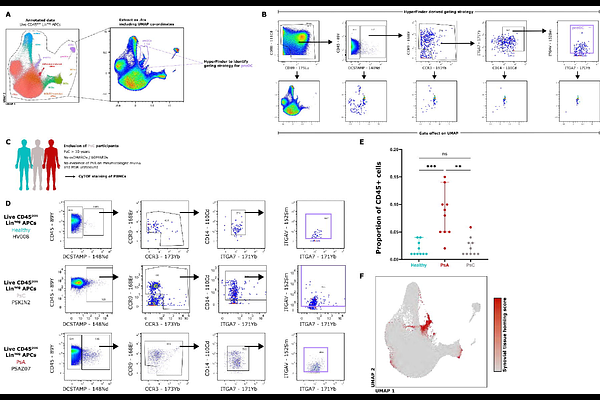
AbstractPsoriatic arthritis (PsA) is a complex immune-mediated inflammatory disease with heterogenous clinical features. Osteoclasts have a unique ability to destroy bone, playing key roles in both healthy bone turnover and pathological erosions in arthritis. They are believed to arise from monocytic precursors migrating to inflamed synovial tissue, though the identity of this precursor in humans has remained elusive. Here, we sought to determine whether monocytes home to psoriatic joints and their phenotype. We find that monocytes are recruited to inflamed joints in PsA but not uninvolved or healthy joints, and identify a pre-osteoclast (preOC) cell state derived from classical monocytes. PreOC are transcriptionally distinct from classical monocytes, are enriched for NFACT1, the master regulator of osteoclastogenesis, and form multinucleated osteoclasts in vitro without exogenous RANKL. They are expanded in the circulation of donors with active treatment naive PsA, compared to both healthy controls and those with cutaneous psoriasis only. Finally, using a customised spatial transcriptomics workflow, we identified these cells within human synovial tissue, and radiolabelling confirmed their recruitment from the circulation. These findings highlight the role of systemic immune priming in macrophage pathophysiology.