Virus specific impacts on honey bee flight performance are mediated by the octopamine pathway

Virus specific impacts on honey bee flight performance are mediated by the octopamine pathway
Kaku, N. G.; Flenniken, M. L.
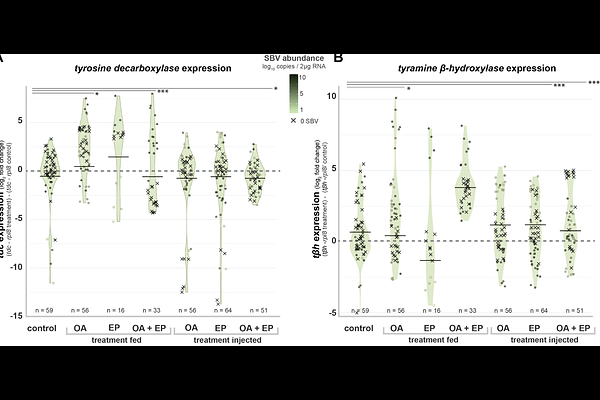
AbstractHigh annual honey bee colony losses are associated with environmental and biological stressors, including virus infections. In insects, the octopamine pathway orchestrates the "fight-or-flight" response, regulating energy mobilization, temperature, and flight. We determined that sacbrood virus (SBV) infections induce expression of an octopamine receptor and enhance honey flight performance, whereas deformed wing virus (DWV) infections reduce flight performance, but how viruses interface with this pathway remained unknown. To elucidate the relationships between the octopamine response, virus infection, and flight, honey bees were infected with SBV or DWV and exposed to octopamine (OA), epinastine (EP)-an OA receptor antagonist, or both OA and EP; flight and gene expression were assessed. Pharmacologic manipulation revealed that octopamine supplementation rescued flight deficits in DWV-infected bees, but diminished performance in SBV-infected bees, while blocking octopamine receptors altered these effects. Transcriptome analyses indicated that SBV infections, and DWV infection with OA treatment, activated honey bee metabolic pathways, and that SBV infected bees had greater expression of genes involved in OA synthesis, unless treated with OA. These results provide a mechanistic explanation for virus-specific impacts on honey bee flight, which may have consequences on foraging efficiency, colony health and virus transmission.