Temporal variation in demography of temperate bats: consequences for population dynamics and disease

Temporal variation in demography of temperate bats: consequences for population dynamics and disease
Gold, S.; Croft, S.; Budgey, R.; Aegerter, J. N.
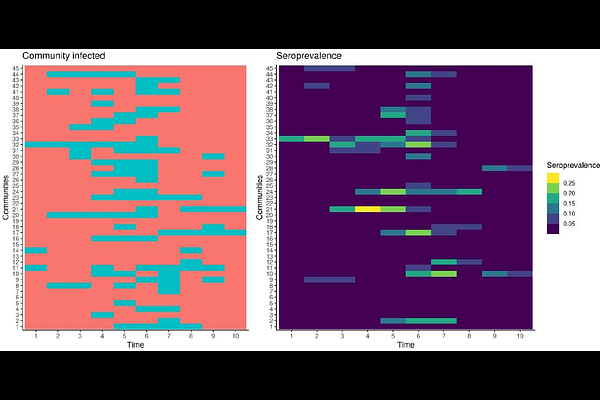
AbstractBat populations experience inter-annual variation in demographic rates in response to environmental conditions. This variation has the potential to impact population sizes and structures, in addition to population-level processes such as disease spread. To establish the influence of variation in demography on these processes, we develop a spatial, individual based model of a serotine bat (Eptesicus serotinus) population, within which we introduce a synthetic lyssavirus-like disease. Model results show that increasing demographic variation, particularly in survival rates, may drive substantial population decline in bat populations. Increasing environmental fluctuations driven by climate change may therefore be problematic for population persistence. The likelihood of disease persistence was also reduced by increasing variation. These findings highlight the limitations of only considering mean demographic rates for prediction of population size change and disease dynamics from models.