Physiological, Behavioral, and Genetic Factors that Shape Interactions in a Plant-Growth-Promoting Maize Rhizosphere Synthetic Community

Physiological, Behavioral, and Genetic Factors that Shape Interactions in a Plant-Growth-Promoting Maize Rhizosphere Synthetic Community
Paulsen, A. A.; Roghair Stroud, M. N.; Halverson, L. J.
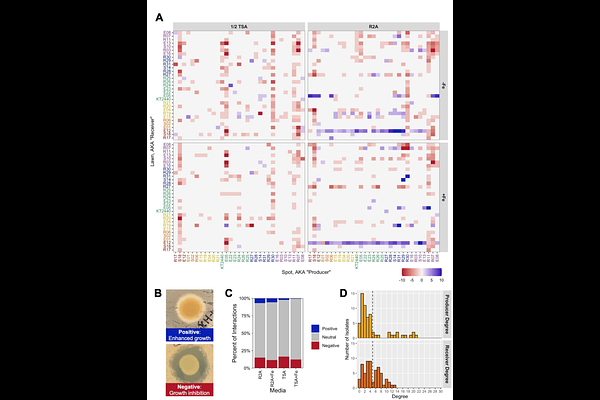
AbstractProfiling microbiomes is an important way to understand the function and composition of communities in the wild, but natural microbiomes are often highly complex and often unamendable to experimentation to reveal cause and effect relationships. By using a small group of cultivable strains to represent those found in the wild, synthetic communities are one solution to this problem. Here we describe the MAize Rhizosphere Synthetic Community (MARSc), a genome-enabled 31-member bacterial community representative of the diversity found on the roots of maize grown in Iowa soils. This community is built around Pseudomonas putida KT2440, a model maize rhizosphere colonist and synthetic biology chassis. We characterized microbe-microbe interactions and biofilm formation of MARSc members in a variety of environmental contexts, finding that both behaviors are broadly controlled by nutrient levels. Genomic analysis and microbiome profiling of these organisms revealed that annotated biofilm genes (such as surface attachment and exopolysaccharide production) correlated to rhizosphere colonization, but neither trait correlated to in vitro biofilm formation. In vitro interactions assay findings were surprisingly consistent with co-correlations of rhizosphere abundance amongst MARSc members on roots. Finally, we found that when applied to the roots, MARSc can increase maize growth under nitrogen-limiting conditions. Altogether, MARSc is a useful tool for identifying some of the factors influencing rhizosphere microbiome assembly and will be a strong foundation for further work in this area.