Subunit vaccination enhances protection conferred by prior Mycobacterium tuberculosis exposure

Subunit vaccination enhances protection conferred by prior Mycobacterium tuberculosis exposure
Cohen, S.; Woodworth, J. S.; Lindenstrom, T.; Gela, A.; Duffy, F. J.; Aitchison, J. D.; Scriba, T. J.; Nemes, E.; Mortensen, R.; Urdahl, K. B.
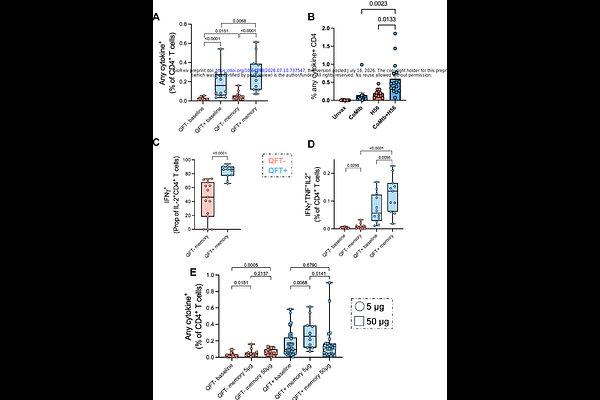
AbstractMycobacterium tuberculosis (Mtb) remains the leading cause of death from a single infectious agent. Although BCG protects against disseminated tuberculosis in infants, it has failed to curb transmission among adults. Animal models are used to prioritize vaccines entering clinical trials, but current models use Mtb-naive mice, limiting their relevance to humans in endemic settings, the primary targets of vaccine trials. Here we used a mouse model of Mtb exposure, CoMtb, where a cervical lymph node Mtb infection protects against aerosol challenge, consistent with historical observations in humans that prior Mtb exposure reduces disease risk. When we compared the impact of CoMtb on vaccine efficacy, BCG failed to provide added protection over CoMtb, while protein subunit vaccination further reduced lung burdens. This protection was associated with decreased KLRG1+ vascular CD4+ T cells and enhanced polyfunctional lung CD4+ T cells before and after aerosol challenge. Our findings were corroborated in an analysis of vaccinated humans stratified by QuantiFERON-TB status, which revealed a similar enrichment of polyfunctional CD4+ T cells in Mtb-exposed individuals. These data support the use of CoMtb to test vaccine efficacy in Mtb-exposed individuals and highlight the potential of subunit vaccines in endemic regions.