Hyaluronan and CD44 targeting reverses early matrix changes, proinflammatory signals and fibrosis in primary sclerosing cholangitis

Hyaluronan and CD44 targeting reverses early matrix changes, proinflammatory signals and fibrosis in primary sclerosing cholangitis
Bansal, V.; Vancza, L.; Fan, J.; Tzu, H.; Nguyen, N.; Richardson, A.; Chronopoulos, A.; Zhang, X.; Wei, Y.; Charville, G.; Li, S.; Nagy, N.; Bollyky, P.; Torok, N.
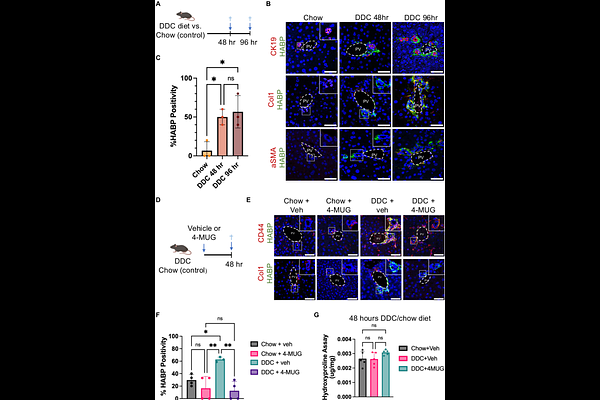
AbstractPrimary sclerosing cholangitis (PSC) is a rare, progressive liver disease characterized by biliary inflammation and bile duct strictures and no approved medical therapy. Despite its clinical severity, the pathological mechanisms underlying PSC remain poorly understood, largely due to early diagnostic challenges. Here we provide complementary evidence in human PSC samples, transcriptomic data, mouse models, and 3D cholangiocyte cultures that underscore the importance of hyaluronic acid (HA) and its cognate receptor CD44 in PSC pathogenesis. HA is a glycosaminoglycan abundant in the extracellular matrix in inflammatory disorders, yet its role in PSC has not been well characterized. We demonstrate that in early-stage PSC, cholangiocytes aberrantly produce high molecular weight HA that accumulates in the peribiliary matrix, increasing local tissue stiffness. This mechanical signal is transduced by a CD44/Integrin {beta}1 receptor complex in cholangiocytes, driving cell proliferation, YAP mechanosignaling, pro-inflammatory cytokine production with a transition to a ductular reactive phenotype. CD44 knockdown in cholangiocyte cell lines and mouse models significantly lowered stiffness, and attenuated inflammation. Together, these findings reveal a mechano-inflammatory axis in which HA-driven matrix stiffening perpetuates biliary inflammation and disease progression, identifying HA targeting and CD44 as promising therapeutic strategies.