The secreted elastase SjCE2b drives host skin penetration by Schistosoma japonicum

The secreted elastase SjCE2b drives host skin penetration by Schistosoma japonicum
Zhu, B.; Shen, Y.; Luo, F.; Su, C.; You, H.; Zhang, X.; Hu, W.
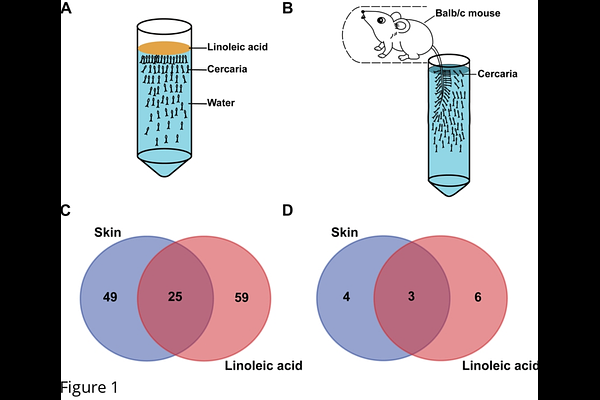
AbstractCercarial elastase is the most abundant protease secreted by Schistosoma mansoni and plays a critical role in cercarial invasion. Although Schistosoma japonicum encodes only a single elastase, SjCE2b, its secretion by cercariae and its specific function in skin penetration have remained elusive. Here, we report the first proteomic analysis of S. japonicum cercarial excretory-secretory products (ESPs) induced by linoleic acid or mouse skin, confirming the presence of SjCE2b in both ESPs preparations. Recombinant SjCE2b expressed in Pichia pastoris was characterized as a trypsin-like serine protease whose activity is entirely abolished by the elastase inhibitor MeoSuc-AAPF-CMK. Furthermore, SjCE2b expression was detected exclusively in cercarial extracts and localized specifically to the cercarial acetabular glands and ducts. Subsequent proteomic analysis indicates that SjCE2b can degrade numerous human epidermal proteins, including ten isoforms of type I and type II keratins. In vitro digestion assays further demonstrated that SjCE2b can digest key structural components of the dermis, including elastin, collogen, and fibronectin. Additionally, the cleavage of complement component C3 and immunoglobulins (IgA and IgG) suggests that SjCE2b may facilitate immune evasion by newly transformed schistosomula. Critically, the incubation of cercariae with anti-rSjCE2b antibody reduced the worm burden by 80.85%, confirming the essential role of SjCE2b in the skin penetration of S. japonicum cercariae and highlighting it as a compelling candidate for vaccine or therapeutic development.