Painting a full radio sky -- Empirical mock catalogues with multiple source populations for future radio surveys

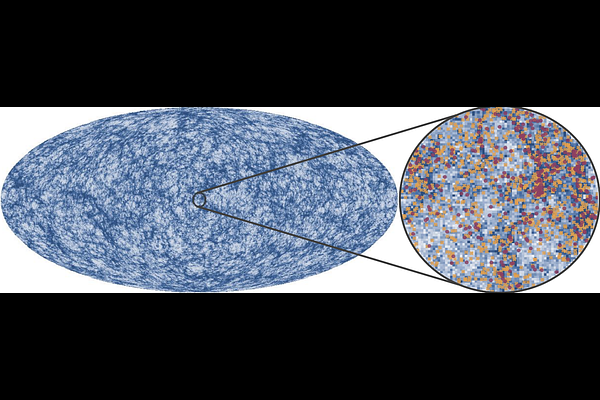
Painting a full radio sky -- Empirical mock catalogues with multiple source populations for future radio surveys
Tommaso Ronconi, Anna Bonaldi, Marta Spinelli, Ivano Baronchelli, Meriem Behiri, Matteo Calabrese, Carmelita Carbone, Marika Giulietti, Andrea Lapi, Marcella Massardi
AbstractUpcoming radio surveys will probe the sky with unprecedented depth and sky coverage, enabling a broad range of cosmological and astrophysical applications, as well as powerful synergies with experiments at other wavelengths. The preparation and scientific exploitation of these surveys require realistic mock catalogues that capture the complexity of the radio sky and the interplay of its emitting components. We present a modular and extensible algorithm for generating empirical simulations over the full radio sky, i.e. a solid angle of $4π$ steradians ($f_{\rm sky}=1$), down to redshift $z=5$, comprising both radio continuum and line emission. The framework combines a simulated dark-matter light-cone with empirically sampled galaxy populations and a probabilistic galaxy-halo assignment scheme, producing self-consistent mock catalogues including multiple radio populations on the same light-cone. We release two public catalogues: a shallow catalogue, fully constrained by existing observational data and limited to flux thresholds of $S_\text{1.4 GHz}^\text{lim} \sim 8\times10^{-5}\ \text{Jy}$ at $1.4\ \text{GHz}$ and $S_\text{21}^\text{lim} \sim 2\ \text{Jy}\cdot\text{Hz}$ for the HI 21 cm line; and a deep catalogue extending the calibrated empirical model to better sensitivities, broadly matching future SKAO surveys, with flux limits of $S_\text{1.4 GHz}^\text{lim} \sim 4\times10^{-5}\ \text{Jy}$ and $S_\text{21}^\text{lim} \sim 0.3\ \text{Jy}\cdot\text{Hz}$. The catalogues include radio continuum active galactic nuclei and star-forming galaxies, together with HI-emitting galaxies, for a total of more than 260 million sources in the shallow catalogue and more than 1 billion in the deep catalogue. We validate the simulations by analysing their statistical properties: the mocks reproduce the targeted clustering and population statistics while retaining minimal physical assumptions.