Unconventional presentation of an immunodominant HLA-DR15-restricted nephritogenic proteinase 3 epitope implicated in vasculitis

Unconventional presentation of an immunodominant HLA-DR15-restricted nephritogenic proteinase 3 epitope implicated in vasculitis
Lu, C.; Shochet, L. R.; Lim, J. J.; Loh, T. J.; Goh, S.; Jones, C. M.; Zhang, J. B.; Allmannsberger, L.; Prakongtham, P.; Tran, M. T.; Chisanga, D.; Ryan, J.; Fugger, L.; Moser, M.; Jenne, D. E.; Reid, H. H.; La Gruta, N. L.; Purcell, A. W.; Rossjohn, J.; Kitching, A. R.
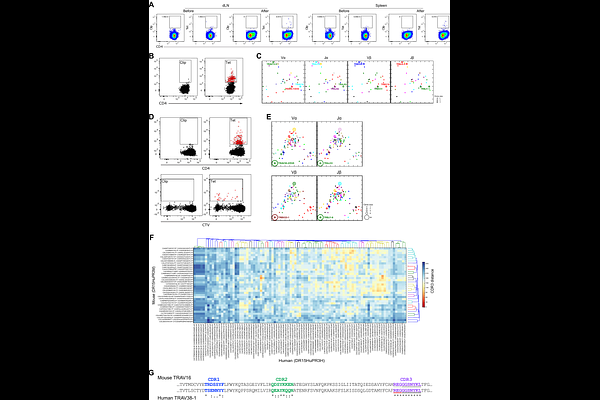
AbstractProteinase 3 (PR3) anti-neutrophil cytoplasmic antibody (ANCA)-associated vasculitis is associated with HLA-DR15, implicating HLA-DR15-restricted CD4 T cell autoimmunity in the disease. However, the PR3 epitopes presented by HLA-DR15 and the autoreactive CD4 T cell responses they elicit are undefined. Using humanized hPR3.DR15+ mice, we identified PR3216-231 as an immunodominant human PR3-derived CD4 T cell epitope presented by HLA-DR15. Immunopeptidomic profiling confirmed the natural processing and HLA-DR15-restricted presentation of PR3216-231. Structural analyses of HLA-DR15-PR3216-231 complexes revealed an unconventional mode of HLA class II antigen presentation, in which a 10 amino acid peptide core occupies the 9 amino acid binding groove, causing a central kink in the bound peptide. PR3216-231-specific CD4 T cells from both hPR3.DR15+ mice and patients with PR3-ANCA-associated vasculitis exhibited convergent T cell receptor features, and patients with active vasculitis displayed a clonally expanded, PR3216-231-specific CD4 TCR repertoire. Immunization of hPR3.DR15 mice with PR3216-231 induced cell-mediated glomerulonephritis characterized by increased renal infiltration of CD4 T cells and macrophages together with segmental glomerular necrosis. These findings identify a nephritogenic PR3-derived CD4 T cell epitope presented by HLA-DR15 in ANCA-associated vasculitis and define a new extended core binding pattern, broadening our understanding of HLA class II peptide presentation.