Epigallocatechin Gallate (EGCG) as a Protective Agent Against Enzymatic Stromal Degradation in Caprine and Ovine Corneas: Towards Novel Therapeutics for Keratoconus

Epigallocatechin Gallate (EGCG) as a Protective Agent Against Enzymatic Stromal Degradation in Caprine and Ovine Corneas: Towards Novel Therapeutics for Keratoconus
Khan, M. U. A.; Ahmad, S. T.; Nisar, S.; Khan, R. N.; Khan, F. F.
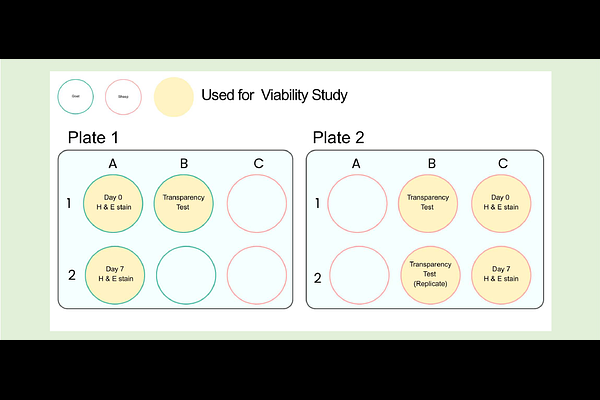
AbstractKeratoconus (KC) is a progressive corneal ectatic disorder marked by stromal thinning, enzymatic degradation, and oxidative stress. Conventional corneal collagen cross-linking (CXL) therapy poses risks. Epigallocatechin gallate (EGCG), a catechin found in green tea, has been shown to cross-link collagen, inhibit proteases, and modulate inflammation, suggesting its potential as an alternative therapy for KC. This study aimed to (1) evaluate the protective effects of EGCG against collagenase-mediated stromal degradation in caprine and ovine corneas and (2) investigate the use of caprine and ovine cornea as viable ex vivo models for corneal ectasia research. Goat (n=4) and sheep (n=8) corneoscleral buttons were cultured in an air-liquid interface (ALI). Tissue viability was monitored by transparency grading and histology. The corneal ectasia environment was induced by collagenase type I digestion. An EGCG-rich extract was utilized for the treatments. Goat and sheep corneas remained intact for 7 days in MEM-based medium, though transparency decreased, with edema (whitening) by Day 7. Histology confirmed stromal loosening and reduced keratocyte cell density but preserved architecture sufficient for enzymatic digestion. EGCG pre-treatment and post-treatment exposure were associated with greater resistance to enzymatic digestion, with greater stromal preservation of quadrants in the EGCG pre-treated quadrant than in PBS pre-treated controls. This study provides proof of concept that EGCG extract confers protection against enzymatic degradation in goat and sheep corneas, highlighting its potential as a protective agent for corneal ectatic disorders like Keratoconus. Additionally, goat and sheep corneas can represent practical and ethical ex vivo models for short-term ocular research. Future work should focus on cytotoxicity, biomechanical validation, optimized culture conditions, and in vivo studies.