Influence of transglutaminase mediated crosslinking on the structure-function-digestion properties of Lupinus angustifolius protein evaluated using a multiscale approach

Influence of transglutaminase mediated crosslinking on the structure-function-digestion properties of Lupinus angustifolius protein evaluated using a multiscale approach
Mukherjee, A.; Duijsens, D.; Faeye, I.; Weiland, F.; Grauwet, T.; Van de Voorde, I.
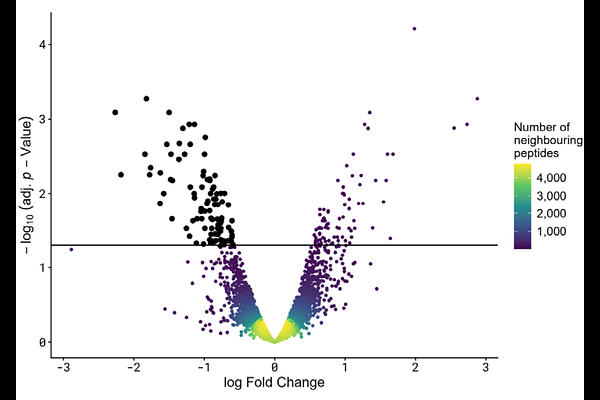
AbstractThis study presents a multidisciplinary approach to evaluate the structure formation and digestion of lupin protein crosslinked with transglutaminase (TG). TG was applied at 0 to 10 U/g protein, and structural development was assessed by oscillatory rheology (G', G'';), while SDS-PAGE and o-phthaldialdehyde (OPA) assays were used to evaluate protein participation and the reduction of free primary amino groups, respectively. Proteomics was further employed to characterise molecular features associated with crosslinking behaviour. Lupin protein showed a clear dose-dependent increase in gel strength during incubation, with G'; values reaching 214{+/-}43.9 Pa at 10 U/g TG, compared to 7.2{+/-}0.6 Pa in the untreated control. Across all conditions, G'; remained higher than G''; throughout frequency sweeps, and low tan {delta} values confirmed the formation of elastic networks driven by covalent crosslinks. SDS-PAGE and OPA results consistently demonstrated efficient crosslink formation, which increased with both incubation time and TG dosage, with SDS-PAGE indicating involvement of specific protein fractions. Proteomic analysis revealed disordered structural domains in the protein are preferred regions to form crosslinks. Furthermore, TG treatment was found to slow the digestibility of the crosslinked lupin protein. Overall, this work demonstrates how integrating proteomic insights with functional measurements can guide the selection and optimisation of plant proteins for enzymatic structuring. The approach offers a rational pathway to enhance the functionality of alternative protein sources such as lupin, supporting the development of sustainable food systems, including applications in meat and dairy analogues.