Bulk and single-cell transcriptomics reveal elevated endogenous retrovirus expression linked to immunopathology in severe COVID-19.

Bulk and single-cell transcriptomics reveal elevated endogenous retrovirus expression linked to immunopathology in severe COVID-19.
Wang, B.; Deckers, T.; Liu, E.; Tokuyama, M.
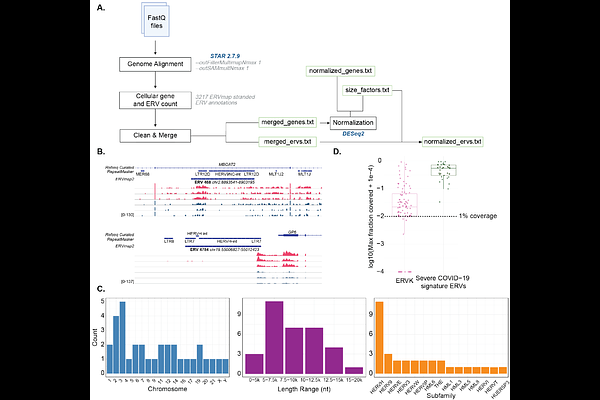
AbstractSevere acute respiratory syndrome coronavirus 2 (SARS-CoV-2) infection triggers expression of endogenous retroviruses (ERVs), but whether this persists during coronavirus disease 2019 (COVID-19) and contributes to disease severity has not been well characterized. In this study, we used bulk and single-cell RNA-sequencing data from the blood of severe COVID-19 patients to investigate the role of ERVs in the immunopathology of COVID-19. Upon quantification of proviral ERV expression, we identified 33 independently transcribed ERV loci that were differentially expressed in severe COVID-19 compared with healthy individuals (severe COVID-19 signature ERVs). ERV activation was associated with changes in the epigenetic regulators of ERVs and strongly correlated with key inflammatory pathways of COVID-19, including neutrophil degranulation, interleukin signaling, and inflammasome activation. Six of the upregulated ERV loci were specific to intensive care unit (ICU) admission and significantly correlated with disease severity, as measured by hospital-free days at day 45 (HFD-45). Finally, at the single-cell level, we detected significant upregulation of severe COVID-19 signature ERVs in erythroid-like and erythroid precursor cells and macrophages of patients with severe disease. Within these cell populations, we found evidence of ERV-associated differences in inflammatory gene expression, whereby cells expressing signature ERVs showed heightened expression of innate immune genes compared with cells not expressing these ERVs. Together, our study unmasked specific ERV loci activated in severe COVID-19 that are linked to the immunopathology that drives progression of severe COVID-19.