Type A Intercalated Cell Dysfunction Disrupts Renal Epithelial/Immune Balance and Impairs Host Defense During UTI

Type A Intercalated Cell Dysfunction Disrupts Renal Epithelial/Immune Balance and Impairs Host Defense During UTI
Chelangarimiyandoab, F.; McNaughton, K.; Essuman, G.; Cordat, E.
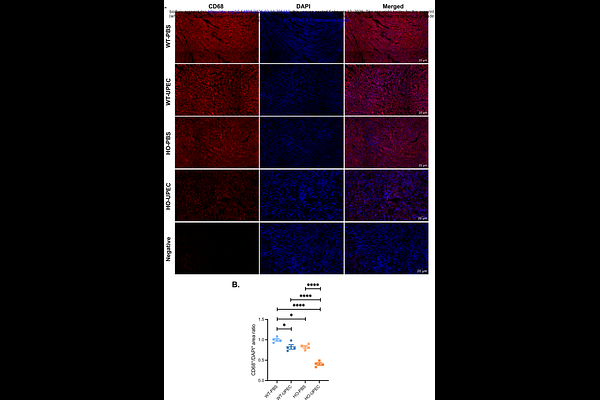
AbstractIntercalated cells (ICs) of the renal collecting duct are traditionally recognized for their role in acid base homeostasis, but growing evidence suggests they also participate in innate immune defense. Although ICs have been implicated in renal antimicrobial function, their specific role in coordinating immune responses during urinary tract infection (UTI) remains unclear. Using Ae1 R607H knock-in mice, a distal renal tubular acidosis (dRTA) model with A-intercalated cell (A-IC) dysfunction, we examined the renal response to uropathogenic Escherichia coli (UPEC). Mice with A-IC dysfunction exhibited higher bacterial loads 24 h post-infection and increased renal expression of antimicrobial peptides lipocalin-2 (Lcn2), galectin-3 (Lgals3), and cathelicidin-related antimicrobial peptide (Camp). Pro-inflammatory cytokines interleukin-6 (IL-6) and interleukin-1beta (IL-beta) were elevated at both transcript and protein levels, whereas tumor necrosis factor-alpha; (TNF-alpha) increased only at the protein level. Interleukin-10 (IL-10) showed a modest rise in mRNA. Chemokines C-X-C motif chemokine ligand 2 (Cxcl2) and C-C motif chemokine ligand 2 (Ccl2) were also upregulated, accompanied by excessive neutrophil infiltration and a marked shift in renal myeloid-cell composition. A-IC dysfunction therefore disrupts epithelial/immune homeostasis, resulting in exaggerated inflammation and impaired immune resolution. These findings identify A-ICs as essential epithelial immunomodulators that integrate antimicrobial defense, cytokine regulation, and immune-cell recruitment during UTI.